Lucien Pagès
BTS
with
PR
mogul
LP
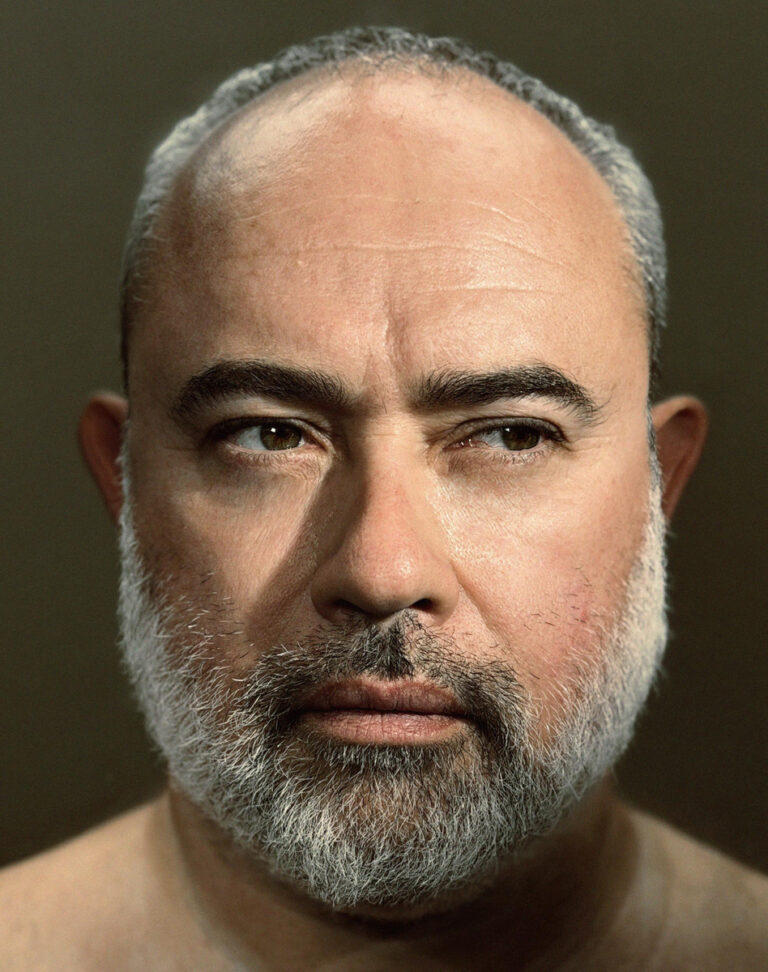
Fashion brands and media could barely exist without PRs as their dogged middlemen, and nobody in Paris does it with as much spirit as Lucien Pagès. Over the last 20 years he has built his company Lucien Pagès Communication into a publicity empire that’s behind everything cool and exciting in fashion today. The ever-present Frenchman is known for being a fixture at nearly every event and show he organises. Thanks to his knack for social media, he’s now more famous
than many of his clients. However, last year Lucien suddenly disappeared from the fashion circus. Perhaps it was because he’d recently sold his business to a wealthy investor? Or maybe there were other, more personal, matters at play? The very welcoming PR mogul is now back, and ready to tell all.
From Fantastic Man n° 43 – 2026
Text by SEB EMINA
Photography by PAUL KOOIKER
(HEAD OFFICE)
One of the first things Lucien Pagès does when we meet is give me a copy of ‘Travels with a Donkey in the Cévennes’ by Robert Louis Stevenson, in which the future author of ‘Treasure Island’ goes hiking with an ass named Modestine. The book was last year’s Christmas present to clients and friends. Its cover – designed and printed by Benoît Astier de Villatte, founder of highbrow ceramics, perfumes and stationery brand Astier de Villatte – depicts Lucien leading a donkey forward along the road, an arm wrapped affectionately around its neck. Lucien is from the Cévennes, which is the key context at play. He grew up in the small, remote village of Vialas, and went on to become the most influential fashion publicist of his generation.
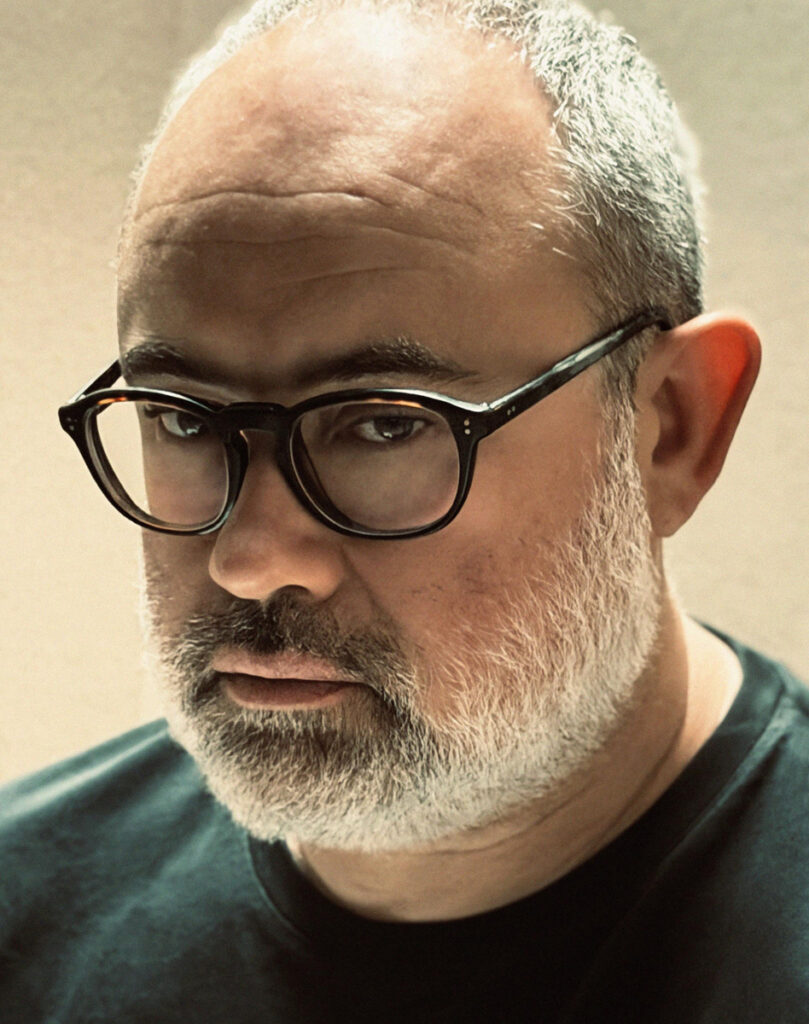
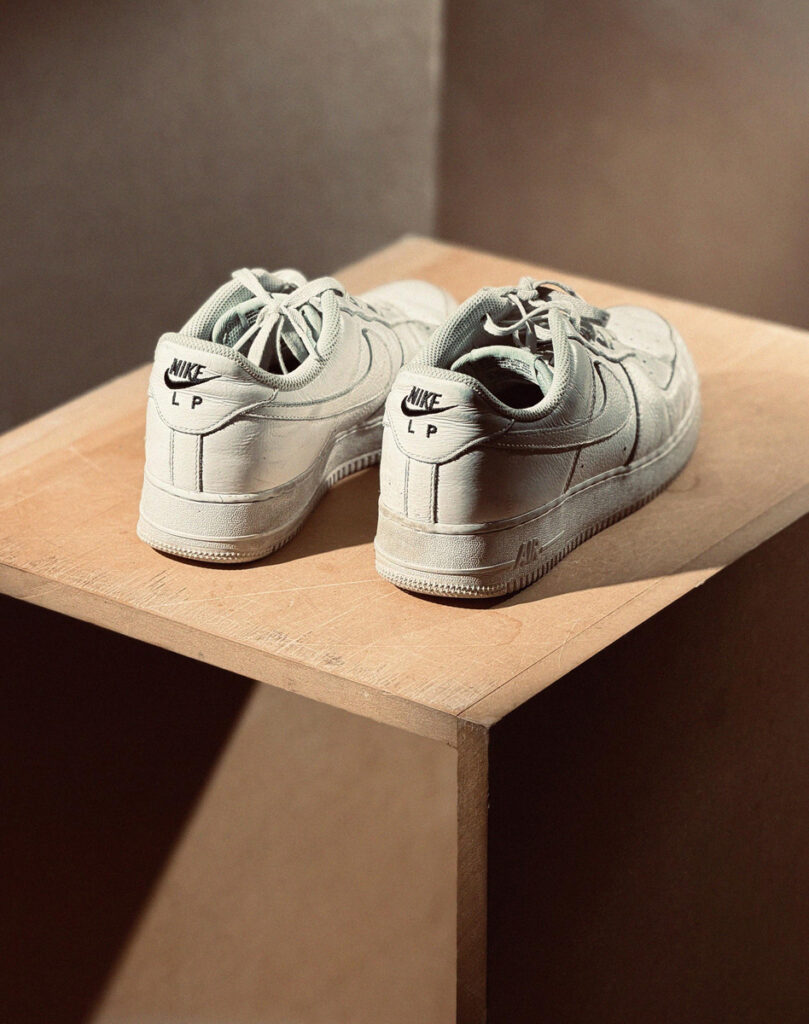
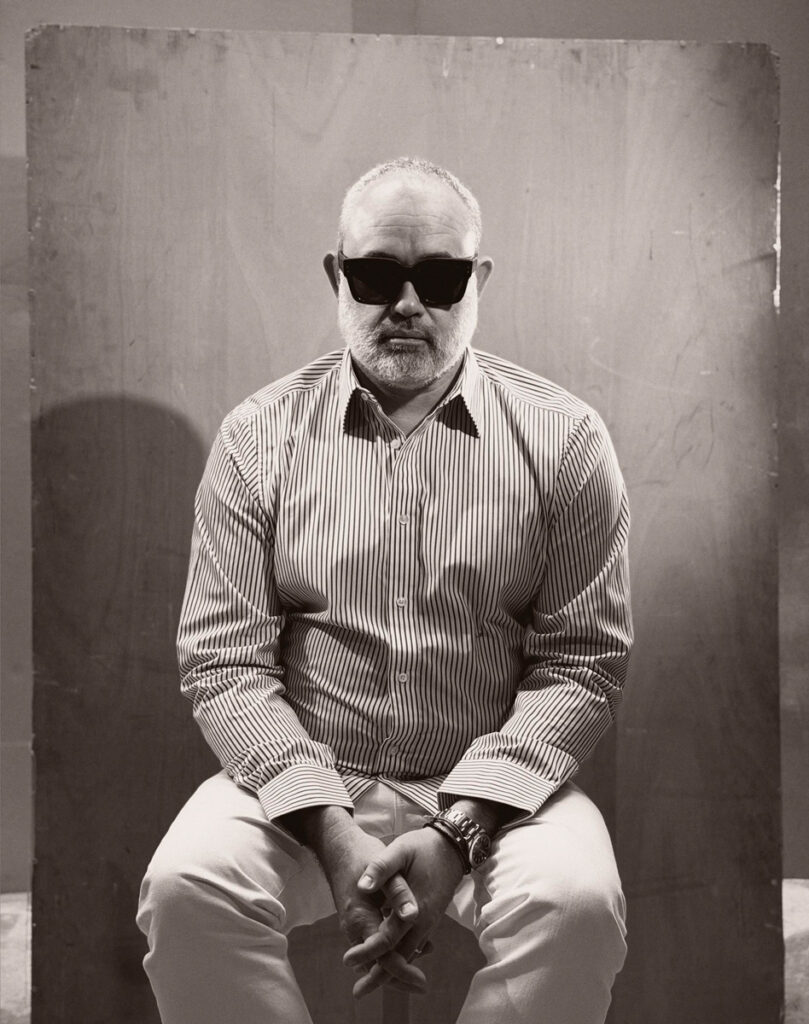
Today Lucien, who is 51, is sat at his desk in the Paris office of Lucien Pagès Communication. It’s in the 2nd arrondissement, not far from where Boulevard Poissonière turns into Boulevard Haussmann (at which point everything suddenly seems part of the same luxury shopping wonderland thanks to department stores Galeries Lafayette and Printemps, for whose product universe some portion of supply and demand has been driven by, or at the very least ambiently massaged by, Lucien’s work). His grey hair and beard are at the longest point where the word “shaved” is allowable. He’s wearing a black T-shirt, white trousers, white Nike trainers and a Rolex watch. His thick, slightly tortoise-shell glasses point, quite exactly, to a close proximity to the worlds of fashion and design.
Lucien’s 140 or so clients include fashion brands like Calvin Klein, JW Anderson, Loewe, Sacai, Saint Laurent and Schiaparelli; beauty brands like Aesop and Humanrace; luxury hotel brands like Pellicano; silverware brands like Puiforcat; restaurant brands (okay, just restaurants) like Le Voltaire; and perfume-slash-scented-candle brands like Byredo and Diptyque. What “client” means here varies quite a lot. A PR agency’s output might involve events, press releases, dinners, shows, presentations, influencer outreach, openings and showroom invites, plus a host of intangible actions that can’t be defined or quantified. Whatever Lucien is doing, he’s always communicating. “Did you know that calling came back?” he asks. “People receive too many emails so now you have to call.” Just out of the blue? “No, I send a message. ‘Can I call you? Do you have five minutes?’”
You imagine most people would have five minutes. Leaning against a wall in the office is a framed graphic entitled ‘Lucien Pagès in one word’: a series of Yves Klein blue squares (the calling card of its creator, the Instagram account Style Not Com) containing words supplied by some of Lucien’s acquaintances. Sarah Andelman goes with “chic.” Nicolas Di Felice offers “magician.” Anthony Vaccarello contributes “malin” meaning smart, shrewd, clever.
Courtesy of the book-prompt, our first conversation is almost entirely about Lucien’s childhood, his origin story. “My grandparents had a hotel and restaurant and my parents took it over, so I grew up there,” he says. The hotel was called the Chantoiseau, or birdsong, and despite its remoteness it attracted very interesting guests. The singer Yves Duteil wrote a song about it, ‘My Cévennes Friend’ (1983), that still goes out on the radio sometimes. Lucien’s father, Patrick Pagès, had a Michelin star and was a master sommelier. President François Mitterand came for lunch once, arriving by helicopter.
Much of Lucien’s sense of fashion and popular culture came via the three TV channels then available in France: “I was obsessed with ‘Dynasty’. It was on every Saturday night. We never had an apartment inside the hotel. We had a little room. I’d see strangers in the corridor. My mum would bring me the dessert that people didn’t want and I’d eat it in front of ‘Dynasty’. It was heaven.”
One day Lucien came across a list of the best fashion schools in the country and decided he would like to go to one. The École de la Chambre Syndicale de la Couture Parisienne (now the French Fashion Institute) was a place dominated by those you’d describe as “BCBG” or “bon chic, bon genre”: members of the French upper middle class, adherents of a certain conservative-coded chic. “I showed it to a friend of my parents because I didn’t dare talk to them about it,” Lucien remembers. “My dad was so scared I was gay. Saying I wanted to be a grand couturier would be to basically say: ‘I am indeed gay.’ So I talked to this friend and was thinking she’d help me to convince them, and she said, ‘They will never take you because you’re not BCBG.’”
They did take him. He learned about fashion history, needlework and draftsmanship, and he assumed he would be a designer. He took some internships, including a stint at Yves Saint Laurent and multiple spells at Dior in the final years of the Gianfranco Ferré era. Lucien’s first real job was with art director Marc Ascoli. “It was communication, but more the image side. We worked on Chloé’s first four campaigns with Phoebe [Philo].” He also helped organise shows for French designer Martine Sitbon, with whom Ascoli shared an office.
It was for Sitbon that he pulled off his first PR coup. “I found this fax asking for one of her dresses for Cate Blanchett, to promote a movie. I found it funny and I went to the atelier, because there were some duplicates, and I sent some dresses to the stylist without asking anyone. Cate Blanchett wore all of them, and there was a particularly bright yellow one. Everyone wrote articles about it because it was a very daring colour. It was my first PR action on my own. Because of the fax machine.”
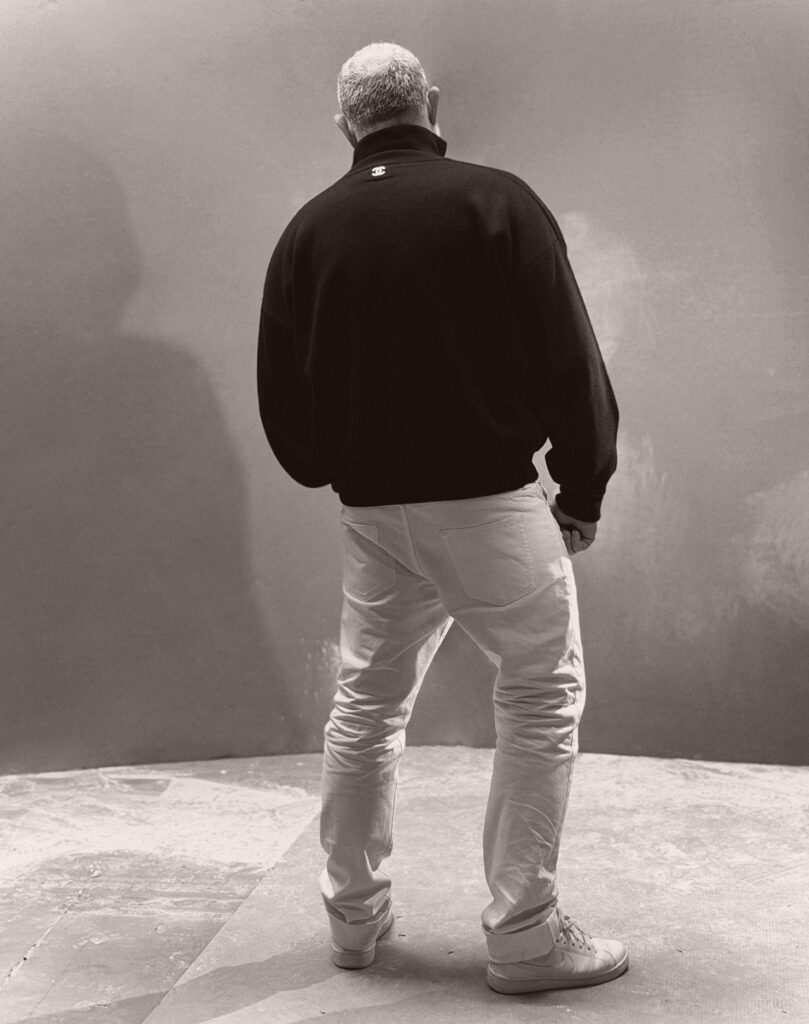
The second time I visit, I bump into Lucien downstairs and we get into the lift together. “Can you give me ten minutes?” he says. “I have to call the New York office. There’s a bit of drama. I hope it’s not like Friday. That was just…” He imitates a fighter blocking strikes from all directions. “I just don’t want it to escalate.” I wait on one of the chairs by his door, opposite the receptionist and a vintage portrait of Kate Moss. Around 50 people work here, and Lucien is on the phone to one of the 15 in the New York branch. The London office – formed from a merger with British PR firm AIPR – has 25 staff.
When I am allowed to enter, I ask what it was about. He declines to say anything other than that today was “internal” and Friday was “external.” His office contains, by the way, around 200 oversize perfume bottles, which are part of a collection that totals nearly 400. Back in 2020, Lucien acted on a long-standing urge to own a giant classic-shaped bottle of Chanel No. 5, which led to wanting a giant heart-including-the-aorta-shaped bottle of C’est La Vie! by Christian Lacroix. He ended up finding ten of these in sizes ranging from ridiculously tiny to impractically huge (they sit Russian doll-like on the mantelpiece behind his desk), and it escalated from there. For a time he shared the bottles on TikTok, attracting as many as 600,000 views per video: there are people who know him as a fragrance collectibles influencer, nothing else. Even so, it all relates to his day job. “I’m not doing TikTok for fun,” he says. “I do TikTok to understand it.”
A publicist’s work used to be mostly about machinating behind the scenes – schmoozing editors, browbeating journalists, gatekeeping talent – but social media changed the equation. Lucien goes to almost every event the agency is involved with, then shares perfectly captured images of them via his Instagram account. With approximately 140,000 followers, including much of fashion’s core elite, that account is arguably more influential than quite a lot of the conventional media coverage he achieves. He runs through some imminent fixtures: the opening of a Paris flagship by lux-casual brand James Perse; a dinner hosted by Snapchat in honour of the wrapping-up of Pont Neuf (the bridge) by street artist JR; and a philanthropic dinner for the Pompidou Centre for which they are expecting around 1,000 guests and have commissioned an enormous flower arrangement that will resemble the tubes on the museum’s exterior. What does success look like for something like that? “That it’s open on time and it goes smoothly. Everyone’s changing their table until the last minute. You need to be sure that the new name is written by the calligrapher. You need to be sure the tables match the most recent changes.”
In a phone call, Business of Fashion editor-at-large Tim Blanks places Lucien in a small tradition of fashion PRs who become almost as well known as the clients they represent. “There is a PR person at any given moment whom everybody wants to be their PR person,” he says. “Before Lucien was Karla Otto. Before that there was Ed Filipowski at KCD. And in the ’90s, Michèle Montagne had all the cool people.”
Blanks – a friend and contact of Lucien’s from the early days – admires his “nose for the new and interesting,” which was evident from the beginning. Lucien founded the agency in 2006. His first client was American designer Adam Kimmel, with whom he shared an office in the Marais (Kimmel later became chief creative officer of WeWork, so office sharing is a theme for him). Other early clients included Jonathan Anderson and Simon Porte Jacquemus.
“He had a very small but amazingly interesting client list and it was already sort of global,” says Blanks. “Adam was from New York. Chitose Abe [the Sacai founder was Lucien’s second client] was from Tokyo – people that you actually wanted to cover. He has this very winning way of actually making you take interest in his clients because you want to. This is an asset for a PR person because you love him and you want to do something for him. So you will go to the thing that he wants you at without dragging your heels and going, ‘Oh, do I have to?’ If you really, really trust their taste and they’re telling you about somebody you haven’t heard about, somebody new that they’re representing, there’s obviously a much stronger chance that you listen.”
(FASHION SHOW)
It’s the first day of Paris Fashion Week Men’s and, as ever, a driver will ferry Lucien between events and appointments. We find the car, a Mercedes, out on the boulevard and climb into the back. A bag has been stashed there containing a change of clothes in case needed. We’re on the way to the SS27 show of the label Rescha, by emerging designer Charlotte Chowdhury (formerly with Jacquemus).
As we drive across town Lucien mentions a piece ‘Architectural Digest’ published last year about his relationship with the Chantoiseau hotel. His father died 15 years ago, and although his mother, Christiane, tried to run it as a guest house for a time, that project proved short-lived. “It was costing more than it was bringing in, with some very strange people passing by,” he says. “I was, like, ‘Enjoy your house if you want to stay there, but I don’t want you to be in danger. I don’t want you to work for nothing.’” So now the 20-room hotel is simply his mother’s house but filled with the paraphernalia of Lucien’s universe: ceramics by Astier de Villatte, cushions and vases by India Mahdavi, a library of magazines in the former wine cellar.
But the point about the ‘Architectural Digest’ piece is that Lucien partly credits the memories it dredged up – his father died from cancer – for his noticing, the day after he did the interview, an irregularity in his testicle that turned out to be a tumour. “Maybe thinking about my dad saved me, because I paid attention to it.” Lucien had surgery but the cancer spread and he went through four rounds of chemo before getting the all-clear.
“It’s a trauma, in my life. My dad died from cancer at 62 and me, I got it at 50. He was treated and, without going into detail, it was very, very tough for him… So I was, like, ‘Okay, now it’s happening to me,’” he says. Did it make him want to change anything? “No. I wanted my life to be back as it was. Not because it was perfect but because I didn’t want what happened to exist, so the way for me to erase that moment was to go back to how things were.” Even so, after the first round, Lucien married his boyfriend of nine years. “It was just, ‘Okay: maybe it’s time to arrange your life.’”
We arrive at the Musée Guimet, France’s national museum of Asian art, an ideal backdrop for Rescha’s Franco-Indian aesthetic. Lucien receives a briefing. “We have ‘Le Monde’ coming through… Angelo Flaccavento…” He and Charlotte take a selfie together and confer for a while, then she’s summoned away by the guy who does TikTok for ‘Le Figaro’, France’s leading centre-right broadsheet. Lucien tells me Vogue Runway have pledged to attend, which is great as they’ve never covered Rescha before, though they haven’t decided whether or not to write a review. He heads backstage, asking if anyone knows where the whiteboard is: he wants to check the final looks. It’s the first time the agency has worked with Rescha. “It’s a special moment: the first one,” he says. “It’s the one I always remember.”
The moment approaches to allow guests in, and the room thins out. It’s important that people aren’t left waiting outside (it is the hottest day in history, heading towards a high of 39ºC), but a shoot has just finished and there are still a couple of models around who should not be seen off duty. I am shown to my allocated chair, where I sit next to Iris de la Villardière, co-founder of jewellery brand Viltier. She lights up warmly at the mention of Lucien’s name. The show starts. A few chiselled men – in sparkly sarees and cotton poplin shirts – appear among the largely female cast.
By the time I re-enter the entrance area, Lucien has left for the Saint Laurent show, shortly to start in the rotunda of the Bourse de Commerce. Near a giant Cambodian statue I run into Louise Chen, the famous DJ. “Lucien’s a sweetheart,” she says. “He’s everywhere, involved in everything, yet still manages to be charming to someone like me.”
Later, the Rescha Instagram account is filled with story reposts from fashion media and notable guests including South Asian community platform Diet Paratha (“She Worked at Jacquemus + Wales Bonner so OFC her PFW Show Was Beautiful”), ‘Women’s Wear Daily’ (“Ones to Watch for Men’s Spring 2027”), ‘Purple’ (“Backstage Rescha S/S 2027, PFW”), ‘Numéro’, ‘Grazia’, ‘L’Officiel’ and ‘L’Etiquette’. Tableware entrepreneur Alice Moireau self-identifies as “a @rescha.paris girl” to her 125,000 or so followers. Vogue Runway, alas, do not show.
(MAGAZINE LAUNCH)
The launch party for the new issue of ‘Acne Paper’ at the Jardin du Palais Royal is packed. Everyone is waving identical black fans to cool themselves down, making it feel like the summer party of an influential secret society. There’s an exhibition in the shop – images of a woman lying in multicoloured paint – but most guests are spilled out into a cordoned-off area in the gardened square. The theme is “Autoportrait,” described in a blurb as “where the magazine turns the gaze towards its publisher for the first time exploring the ideas that have shaped the house over three decades.”
Lucien’s agency has been helping to compile the American names on the guest list. I find him standing in front of the gate, talking to four people who are facing him and not each other. He is friendly and warm but there’s an inscrutability to him as well, a perennial sense there’s more he could theoretically say but won’t. About what, you’re not sure. He greets a revolving cast of interlocutors: a shinily black-clad Lauren Sherman from Puck, then Edouard Benadava, chief content officer at communications and production group The Independents. “I’m building our content vertical,” Edouard says.
The Independents acquired Lucien Pagès Communication back in 2024, adding it to a communications “vertical” (i.e. companies sharing an industry or theme) that also includes Karla Otto and AIPR. But although Lucien no longer owns the agency, the operational side remains the same. “There is more financial reporting, of course, so you feel the numbers more, but that’s why they leave me very free,” says Lucien. “People have fantasies about the group. It looks powerful, but in the end we do the same job. They just want me to perform in the best way possible.”
It’s a 40ºC evening. Desperate for hydration, I walk over to a bar surrounded by people with five-or six-figure Instagram followings: Syrian-Swedish painter Jwan Yosef, avant-garde surfer Michael February. I spot Lucien heading away along the ornate arcade. Is he leaving? “Yes!”
(SHOWROOM PASS-BY)
Lucien’s agenda this week also includes the launch of a “queer library” by Aesop, a cocktail reception for Meta, and shepherding guests through showrooms from relevant brands such as Our Legacy, God’s True Cashmere and JW Anderson. The latter is on the Rue du Louvre. It’s laid out and organised as if a retail outlet, and indeed it will be a pop-up store a little later this year. There’s a pair of floral Chelsea boots, a sweatshirt displaying the phrase “Anonymous Nude,” and a soft, brown replica of a squirrel. Lucien arrives, checks in with his door staff, then introduces me to Adam Iezzi, founder of AIPR, who merged with Lucien’s UK operation just over a year ago. “When you’re a PR you meet a lot of other PRs, but there’s no one else that I wanted to get into bed with,” Adam says.
(PRESENTATION)
The presentation for the new collection of Californian brand ERL is in a completely pink room with flowers painted onto the walls. Models lounge on cuboid blocks. On one plinth is a small pile of paperbacks. There is an Old English Sheepdog in the room, which seems to be part of the show. ‘Candy Girl’ (1963) by Frankie Valli & The Four Seasons, a proper diner-after-high-school number, is playing.
Is it meant to feel a bit David Lynch? “Maybe a bit Barbie,” says Lucien. It’s our last encounter. On Sunday, he’ll fly to Corsica for Jacquemus. Earlier this week, he tells me, ten influencers got trapped in the lift to his office. This doesn’t surprise me: it felt relatively full with two of us in it, and so certainly wasn’t designed to take that many people, or influencers. “Now nobody can use the lift in our whole building. I’m quite ashamed.” A guest kisses him on both cheeks. Another squeezes his arm: “C’est magnifique! C’est beau, eh?”
Does Lucien have an armoury of solutions for dealing with sticky situations? “When there’s a problem, we have to find a way for everyone to save face so we can move on. For a long time you could say, ‘It was a misunderstanding.’ But we’ve used it too much. People are starting to say, ‘No, it’s not a misunderstanding.’ And you’re, like, ‘Fuck, I tried the “misunderstanding.” It didn’t work.’”
Collaborative guest lists are a hornet’s nest. Lucien remembers an event “for someone very rich” where they were asked to get rid of a guest who’d slipped onto a supplementary list compiled by someone else. “They’d received the invitation and !SVP’d so what could I do? I couldn’t disinvite her. So I created what looked like a mass mail-out, saying that due to unfortunate circumstances, and because of security, we weren’t actually allowed to invite any more people and please accept our apologies. But in fact only one person received it. The person wasn’t offended because she imagined she was one of many.”
Lucien left hospital on 20 December 2025 and was back in the office on 8 January. “It was difficult for me because I work in fashion and I came back with no more hair and a fat face. I decided I didn’t care. I went to events.” It had been a lot thanks to his non-attendance that people caught wind of his illness. If his job had only involved emails, they wouldn’t have noticed: he never stopped replying to them. The idea to make a new edition of ‘Travels with a Donkey in the Cévennes’ came during treatment. “I was finishing a journey, and it made me think of Stevenson, you know?” But despite the Cévennes coming up a lot, Lucien wants to disavow the appearance of hanging on to the past. “I’m not nostalgic for my childhood. I wouldn’t go back there for anything.”
As for actually reading the Stevenson book, the instinctive reaction is to think, “Well the contrast couldn’t be bigger could it?” Travelling around small villages in the 1870s versus achieving visibility for luxury brands in the 2020s. Another way of looking at it though is that it’s a powerful testimony to the power of PR, simply given how many people go to the region because of it. I’m not saying a press officer called Stevenson in 1878 to invite him on a “trip,” just that cultural gestures can have a long-lasting impact. There is a business in Vialas, near the Chantoiseau, where you can rent a donkey and follow Stevenson’s route. Vaguely related, the grandson of Yves Duteil, who wrote the song about the hotel, is now doing an internship with Lucien.