Mahershala Ali
Revelations over breakfast with the Oscar-collecting actor
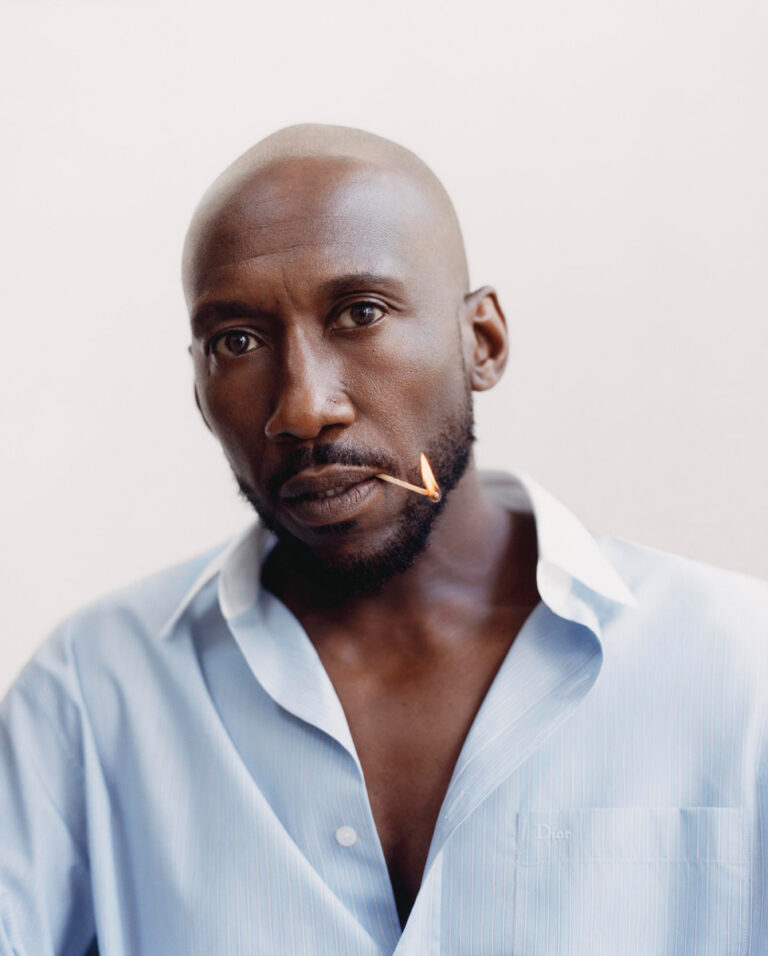
American actor Mahershala Ali received his first Oscar for his electrifying role in ‘Moonlight’. (Remember that crazy ceremony, when the coveted gold statuette for best film was mistakenly awarded to ‘La La Land’, only to revert to its righteous winner a few minutes later?) Just two years on, he scored another Academy Award, this time for his part in ‘Green Book’. What’s even more amazing is Mahershala never originally set out to act in the first place – he was an athlete and a poet. He’s even released a few original rap albums as Prince Ali. In his new film ‘Your Mother Your Mother Your Mother’ he plays a sword-wielding father of three – a role written especially for him. Over a sandwich in Philadelphia, where he’s shooting for HBO, the actor contemplates his almost cinematic life story and how his world turned upside down on 31 December 1999. What exactly happened?
From Fantastic Man n° 43 – 2026
Text by ANTWAUN SARGENT
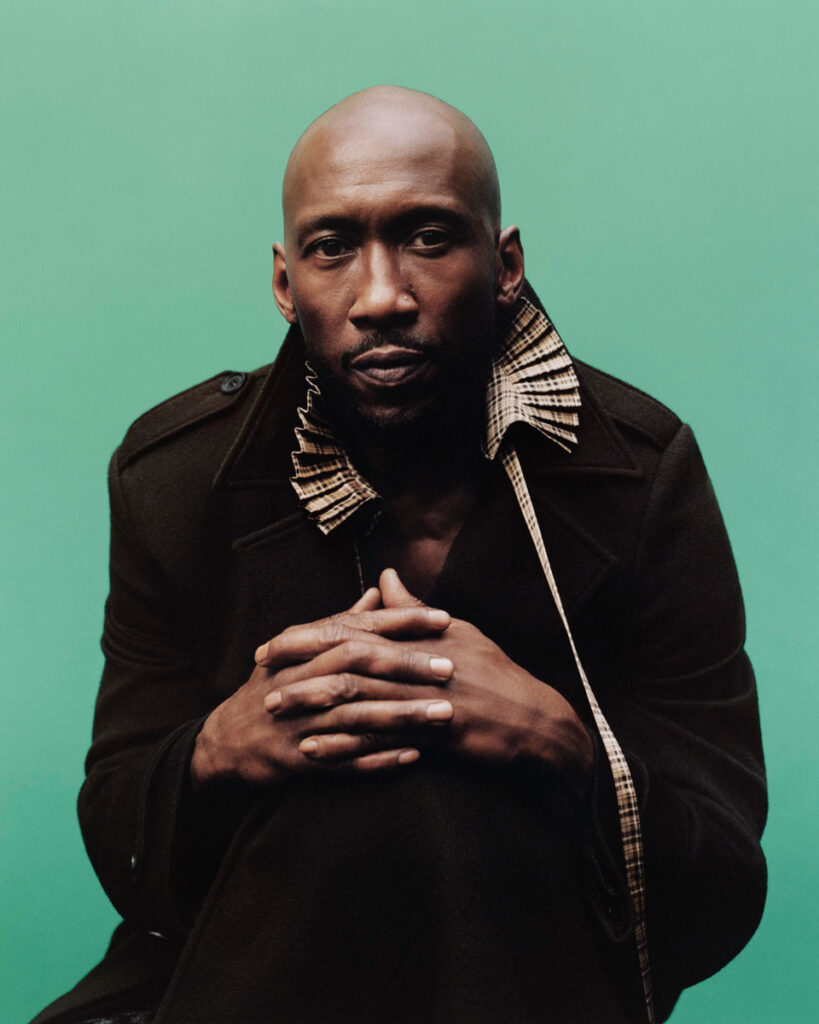
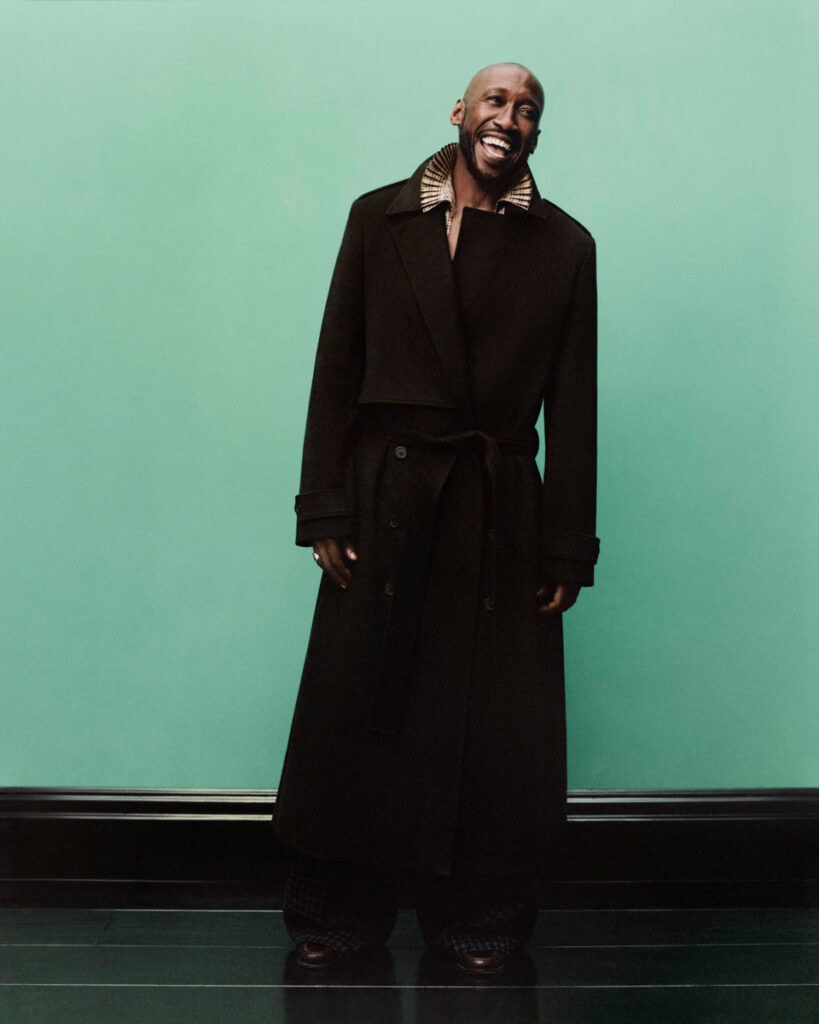
Photography by TYLER MITCHELL
Styling by JASON RIDER
Fashion by DIOR
It is 11.05am. Mahershala Ali’s face is alight with passion and his smooth baritone is cracking. It is a seasonably hot Friday in early July, and we are having breakfast at a quaint cafe nestled along the Schuylkill River, the 135-mile tributary that flows through the heart of Philadelphia. He has barely touched the turkey wrap he ordered. The performer is in the process of telling me what happened on the last New Year’s Eve before the millennium. It was a day that changed the trajectory of his life. As he remembers it, the morning didn’t begin like a typical one. Ali awoke with an urgent urge, a call to be somewhere. Like a tidal wave that builds up before unexpectedly rolling over a stretch of coastline, this moment had been amassing strength for a week. “A light went off,” Ali explains. “It felt weird to me at the time, but there was something that was resonating, and I felt… This felt new.” He trails off before returning to the feeling: “This, this, this is different.”
An hour earlier, the actor and I meet for the first time. He arrives in the restaurant through a side door, entering briskly and immediately greeting me with a firm, enthusiastic handshake. He is wearing a pair of sunglasses with orange-tinted lenses and a green cap which compliments his pastel-dyed chore jacket. The faint noise of conversation continues in the cafe as he settles into his chair. Before I can say anything, he asks, “Where are you from?” I tell him Chicago, although I now live in Manhattan, and Ali takes the opportunity to briefly expound on the benefits of West Coast living. He used to live in New York but left a decade ago, having relocated in 2016 to Los Angeles, where he lives with his wife and daughter in the leafy Mount Washington neighbourhood. “I do so much better outside of the city,” he says. “I think California gives you more opportunity for that.”
The 52-year-old actor was born in Oakland, California, in 1974. He was raised by a single mother, Willicia Goines, from whom he became estranged when he was 16. They have since reconciled. While he was growing up, sports played a pivotal role in his life. “I was always a good athlete,” says Ali, who eventually went to university on a scholarship to play Division I college basketball as a 6-foot-2 guard at Saint Mary’s College of California. The first sport he truly fell in love with, however, was bike racing. His uncle owned a track in Fremont, California. “I started when I was four,” he says, reaching into the pocket of his tan trousers to retrieve his phone. He scrolls through it and finds what he is looking for. He looks at the screen, smiles and then reaches across the table to hand me the phone. I see a scan of a grainy black-and-white news clipping. It shows Ali, his cousins and some friends huddled together victoriously after a bike race. “Between four and ten, we were in the ABA, the American Bicycle Association,” he says proudly. “I was a BMX racer, and I was also on the Schwinn competition team.”
During his childhood Ali would often travel back and forth between the Bay Area and New York City. In 1977, his father, Phillip Gilmore, moved to the latter city to pursue a career as a Broadway dancer. He performed with the Dance Theatre of Harlem, joined the cast of ‘Dream Girls’ and took on small roles in films like Spike Lee’s 1992 biopic, ‘Malcolm X’. Ali tells me his father got to New York by winning a national dance contest on the television programme ‘Soul Train’. “I remember it vividly. It’s clearly one of my earliest memories,” Ali says. “Let me find it!” Seconds later, we are back on his phone, watching an old clip of his father in the competition. Gilmore is lithe, with a perfectly coiffed Afro, and dressed in a brown low-cut tank top and a white pair of ballooning harem pants. It’s all very 1970s Black Arts Movement. Round after round, he dances marvellously with his partner, Linda Lewis, until they are announced as the winners of the $2,500 cash prize and a car. “I remember him coming back to my grandmother’s house, and we were all looking at the car outside,” says Ali. “I grew up kind of just knowing that really impractical things are possible.”
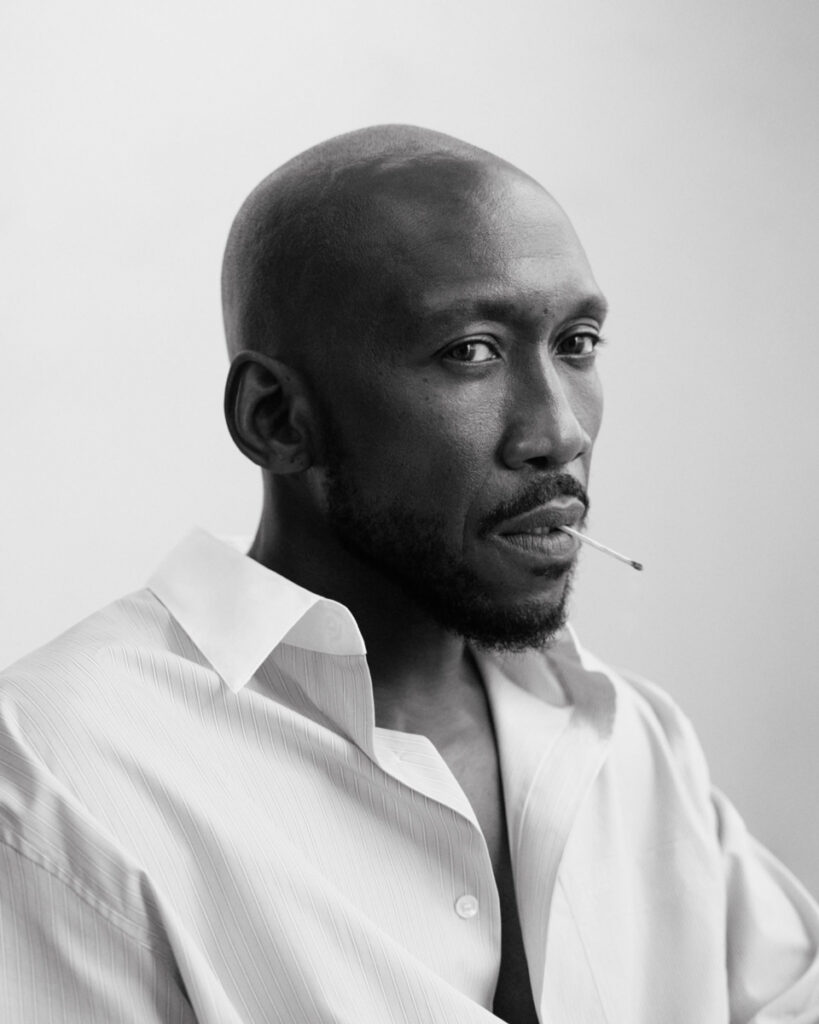
Ali’s father passed away in 1994 at the age of 38 after battling a long-term illness. “I was 20 when he died,” Ali says. “Before he passed away, we spent a summer watching movies on LaserDisc. ‘Reservoir Dogs’; ‘One False Move’ with Michael Beach and Billy Bob Thornton; Ethan Hawke and Winona Ryder in ‘Reality Bites’. Ben Stiller had directed that. And of course, he had taken me to see Spike’s movies in theatres, you know?” The way Ali describes it to me, it is as though his father was racing against time to introduce his son to the things that mattered most to him. “He’s essentially introducing me to indie films five minutes before he passes away,” Ali says.
Ali wasn’t acting at the time. What he had been doing was writing poetry, both as a way of processing his father’s death and to deal with insomnia. He would send his poems to Gilmore to read, and when they were together his father would gather his friends and encourage Ali to perform his pieces. “So I’d do ‘Cool Birth’ or one of my other poems, and I could see the reactions of his friends.” Encouraged by his father, who even got him a directory that listed literary agents, Ali would perform the poems as monologues at school, and eventually at the California Shakespeare Festival. Poetry has continued to be a constant in his life. His poems have helped to anchor him and helped him to find meaning and courage in moments of confusion. In 2024, he performed a reading of the young poet Mohammed al-Qudwa’s ‘Longing for Haifa’ to raise funds for the safe evacuation of the writer’s family from Gaza to Egypt. In a video published online, Ali wears a black dress shirt and a red and orange kufi. The first few lines ring out clearly under the weight of the rich seriousness of his voice. They contain within them the universally binding, yearning sorrow of colossal personal loss:
I comb the seashore with my eyes for the last time
Waiting for a ship
A sail
Or even just an orange tree branch
I want to cross
Break through the sea’s barriers
I want my orange tree to bear fruit
For whatever lives in the sea to eat
Maybe it will save me from a shark’s teeth
I smile at the sea one last time
Or maybe the time before last
I watch for Noah’s miracle…
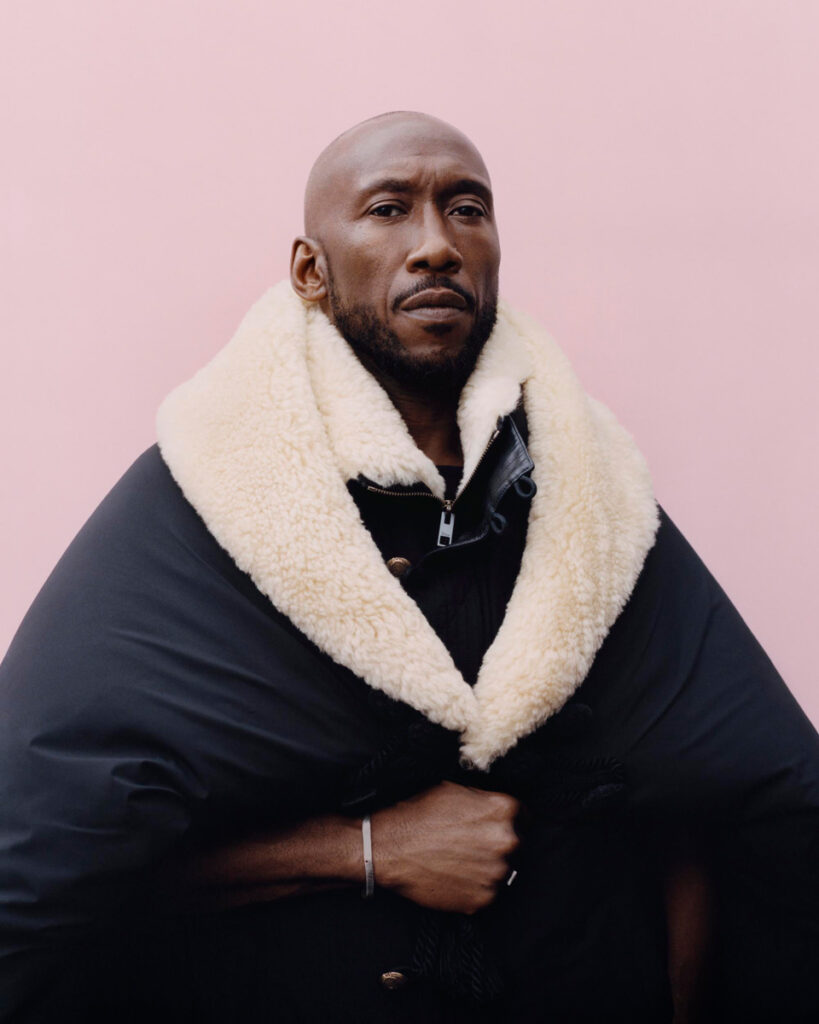
“It was really my poetry that transitioned me into acting,” says Ali. More than two decades into his career, he brings a subtle gravitas and a tender emotional power to each role. He often takes on parts where his skill lies in exhibiting the quiet authority found in the natural warmth of his gaze. He has showcased this in television roles as the suave political lobbyist Remy Danton in Netflix’s ‘House of Cards’ and the hot, thoughtful Sheikh Ali Malik on the second season of comedy-drama ‘Ramy’. He has brought the same intensity to characters in movies like 2017’s ‘Roxanne Roxanne’, about the life of the hip-hop pioneer Roxanne Shanté, in which he played Cross, the rapper’s controlling older boyfriend. Ali tells me the film was “not a fun thing to shoot, because I was abusing a young girl. And it just had a real profound effect on me, so much that I couldn’t sleep.”
Ali’s breakout film role came a year earlier, in 2016, when he played Juan, the Cuban-born drug dealer turned unlikely father figure in Barry Jenkins’s critically acclaimed ‘Moonlight’. He showcases a startling humanity as he shepherds Chiron, an abandoned gay Black boy, on an odyssey back to himself. They travel together through the contradictions of inner-city Miami poverty and the often perilous intersections of sexuality and race. That 2016 performance allowed Ali to pick up his first Oscar, for best supporting actor. The second came with 2018’s ‘Green Book’, an imperfect period film in which he played Dr. Don Shirley, a wealthy, world-class Black pianist, who hires a white driver (Viggo Mortensen) to escort him on a concert tour through the American South in 1962. Ali is the first Black actor to win multiple Academy Awards in the same category and the second (after Denzel Washington) to win more than one acting Oscar.
His latest film, ‘Your Mother Your Mother Your Mother’, is set to premiere at the 2026 Toronto International Film Festival. The genre-blending epic sees Ali in the lead as Latif, a sword-wielding devout Muslim samurai. In the opening scene, Latif, a hitman and an absent father, receives a call as he is finishing a job, informing him that his wife, Khadija (Shakirah DeMesier), has unexpectedly died. As the film unfolds he is confronted with his work, faith and fatherhood in ways both dire and hilarious. The plot is pushed forward by Latif’s quest to protect his three children, one a newborn girl who in the sudden absence of her mother rejects baby formula. Latif’s new mission is a desperate crosstown search for breast milk. Throughout the 111-minute film a bigger question is asked, tenderly and probingly, by his teenage daughter, Adia, who occasionally engages in activities that would definitely be considered haram: “Why did you leave me?” Latif: “So I could find my way back to you.”
I ask Ali, himself a practising Muslim, if the film feels personal. “The role of Latif is personal, but they are all the same,” he says of all the characters he has played over his long career. “I feel what I think is an extraordinarily healthy pressure. To me, acting honestly feels like life or death. I’m sure some firefighter, some military person or police officer could call bullshit on that. But what I’m saying is: for me, artistically, if you look at me and go, ‘I don’t believe you,’ that means I just died.” As he talks, he balls his hands into fists, revealing a silver ring with a giant green quartz inset.
He has developed this view from his experiences, and deeply felt frustrations, as one of very few prominent Black Muslim actors in Hollywood. “What Hollywood does is – especially with Black actors – they ask you to turn water into wine,” he explains. “And once you turn water into wine, instead of giving you a vineyard they just give you another glass of water.” He goes on: “Coming up, especially in television, you get written for in bits. So you learn that: this one-eighth of a page of a scene, this half a page of a scene. I have one response, which is to bring the heart, especially as a Black person, because they’re never gonna focus on your cerebral quality.”
It is odd that an actor of Ali’s calibre has not been given more leading roles in Hollywood. He certainly looks the part, and with multiple major awards, he clearly has the talent. This paradox is not unique to Ali. Black artists are asked to prove themselves time and again in a culture industry that is more concerned with not appearing racist than with addressing the structural inequalities that allow white actors to burn up significantly more screen time than anyone else. Black actors’ unique gifts are often only seen as a way to represent how progressive the industry can be. Ali has dealt with this reality by being patient, being comfortable saying no and waiting for the rare opportunity to display his talents in full. “Eventually, if you’re fortunate enough to end up with a ‘Your Mother’, where I’m getting scene after scene after scene after scene, where not only do I get to bring it but I have to bring it…” He expands: “I’m finally written for in a way where all those things that you learn to do, you have to bring every single moment, or you fail.” He laughs before exclaiming, “Do it or else!”
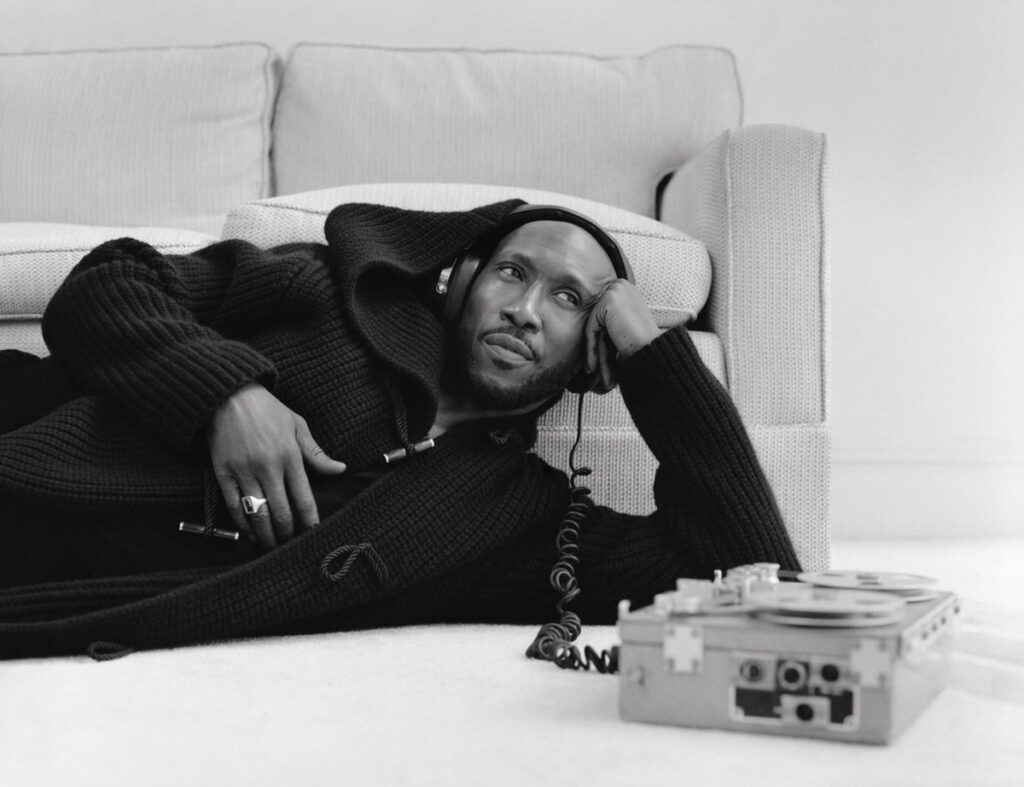
During the pandemic, when writer and director Bassam Tariq was penning the ‘Your Mother’ script, he wrote in “M” for Mahershala as the lead. He hadn’t met the actor yet but knew he would be perfect for the role. “He carries himself with this incredible dignity,” Tariq tells me over the phone. The film-maker studied Ali’s interviews and films as he developed Latif, who, in the Islamic tradition, is referred to as Al-Latif, “the most gentle,” one of the 99 names of Allah. “I think the thing of a prophetic character – the prophet Muhammad, peace be upon him – in our religion is we never portray him, but the idea is he is portrayed by all of us.”
Tariq first met the actor when he signed on to direct Ali in the now shelved remake of Marvel Studios’ ‘Blade’. The original movies starred Wesley Snipes as a vampire-hunting swordsman with a semi-iconic V-shaped, low-cut fade who is out to avenge his mother’s death. At the time of writing, the new venture seems to have died a slow death in continually stalled pre-production over the last seven years.
“When we started working on ‘Blade’, I was, like, ‘All right, this is the guy,’” Tariq says. “We connected at this really deep spiritual level. When I walked off of ‘Blade’, I reread the draft [of ‘Your Mother’], and the first thing I said was, ‘I have to call Mahershala.’” First, he rewrote parts of the film to include things he picked up on the set of ‘Blade’, like sword fighting, which Ali does to dazzling effect at the end of the film. “You have to be able to carry grief; you have to be a little manic. I mean, the dude is searching for breast milk in all the wrong places. Also, he is having a crisis of faith. He is someone who can be really violent but also loving. So there are all of these things you need to have in a person. And I think knowing what I knew about [Mahershala] and how he was with his family – I have seen the way he looks at his wife and how he talks about his daughter. You can’t act that.”
Ali is here in Philadelphia for pre-production of season two of the HBO crime drama ‘Task’, where he will play respected Drug Enforcement Administration agent Eddie Barnes. He tells me this city is where he began his own journey to find an enduring faith. The process began in the late 1990s, while he was in graduate school at New York University’s Tisch School of the Arts. As someone who had recently started acting, he was being broken down and built back up again. It made him question a lot of things about himself. “You’re being picked apart, and you’re constantly processing other people’s problems, because you’re learning how to take on character. But you’re also starting to really process and look at yourself.” He continues: “In the midst of all that, I was really trying to figure out why I believed what I believed.” He already had what he called “Mama faith”: “I just believed in God.” He had inherited this unquestioned belief as a child from his mother and grandmother, both ordained Baptist ministers. The actor’s full first name is Mahershalalhashbaz, the longest name in the Hebrew Bible. In early adulthood, he questioned everything he’d been taught. He began to read books such as Gary Zukav’s spiritual self-help guide ‘The Seat of the Soul’ and visited a Baháʼí centre in San Francisco and a non-denominational church in nearby Oakland.
On the evening of 24 December 1999, he began to have a personal breakthrough. He was in Philadelphia to hang out with a group of friends, including his future wife, Amatus Sami-Karim, a Muslim former classmate at Tisch, and her friend Questlove, the drummer and co-founder of hip-hop band The Roots. The group went to watch ‘Man on the Moon’, the Jim Carrey biopic of comedian Andy Kaufman. Afterwards, Ali felt an unexplainable need to visit a mosque for the first time and decided to join Sami-Karim and her mother, who were both visiting one that evening. “I went in, and there was this brother named Maneer that took care of me,” he recalls. “I heard the sermon,” he says, laughing softly to himself at the memory. “We go to make the prayer, and they start in Arabic, and I just start crying. I had cried in church, but this feels different.”
And so we arrive at 31 December 1999. Ali was back in New York. His friends were due to arrive from the Bay Area to visit him for the New Year’s weekend. But he awoke that morning in his apartment in the South Slope section of Brooklyn with an unusual thought: “I gotta go to the mosque. It’s Friday.” He didn’t know where a mosque was in New York, but he knew that the bodega on the corner, where he often bought potato chips and toilet paper, was operated by some Muslim men.
“I go to the corner store. I was, like, ‘Hey, peace, brother. Where’s the…mosque?’”
“The mosque?” the man replied.
“Yeah, where’s the mosque?” Ali repeated.
“Well…Omar is going,” the man said, pointing to another man sitting reading a newspaper in the corner of the store.
Ali turned to Omar and asked if he could accompany him. “Yeah, but we have to go soon,” Omar said. Ali borrowed his roommate’s car, and Omar guided him to a mosque on Atlantic Avenue in downtown Brooklyn. It was packed with worshippers there to celebrate the new millennium. In the throng, Omar and Ali got separated, and Ali ended up in the back by a radiator at the start of the opening prayer, Surah al-Fatihah.
Across from me at the table, Ali looks down at the turkey wrap he has barely touched and starts to recite the prayer in Arabic under his breath:
بِسْمِ اللَّهِ الرَّحْمَٰنِ الرَّحِيمِ
الْحَمْدُ لِلَّهِ رَبِّ الْعَالَمِينَ
الرَّحْمَٰنِ الرَّحِيمِ
مَالِكِ يَوْمِ الدِّينِ
إِيَّاكَ نَعْبُدُ وَإِيَّاكَ نَسْتَعِينُ
اهْدِنَا الصِّرَاطَ الْمُسْتَقِيمَ
صِرَاطَ الَّذِينَ أَنْعَمْتَ عَلَيْهِمْ غَيْرِ الْمَغْضُوبِ عَلَيْهِمْ وَلَا الضَّالِّين
At the time, he didn’t understand a word, but the sensation of hearing the prayer made sense. After it ended, Ali sat there, and a stranger came up to him. The guy was around his age, 25.
Guy — “Are you Muslim?”
Ali — “No.”
Guy — “Do you want to be?”
Ali — “Yeah.”
The guy went up to the imam and whispered something to him. The imam stopped everyone and called out, “Allah akbar.” He brought Ali to the front and asked if he wanted to be Muslim, and Ali said he did. He instructed the actor to get on his knees and repeat the Shahada, the Islamic declaration of faith, after him in Arabic. “Once I said that, he said, ‘You’re Muslim now.’” Ali laughs, still struck by the unexpected ease and spontaneity of it all. Eventually, he and Omar found one another again at the end of the service. “He was crying his eyes out,” says Ali.
It is 11.14am. I look over at Ali. He has removed his sunglasses. Underneath the hat he is wearing, I find his eyes. A small tide of water has gathered around his dark brown irises, allowing the hints of amber in his eyes to glisten, as if they are small subdued suns burning with the morning’s light.
Photographic assistance by Zack Forsyth and Brandyn Liu. Styling assistance by Fred Kim. Hair by Roddi Walters at Bryant Artists. Make-up by Nolan Eakin. Tailoring by Tae Yoshida. Set design by Nicole Roosien. Production by Brachfeld.