Gabriel Moses
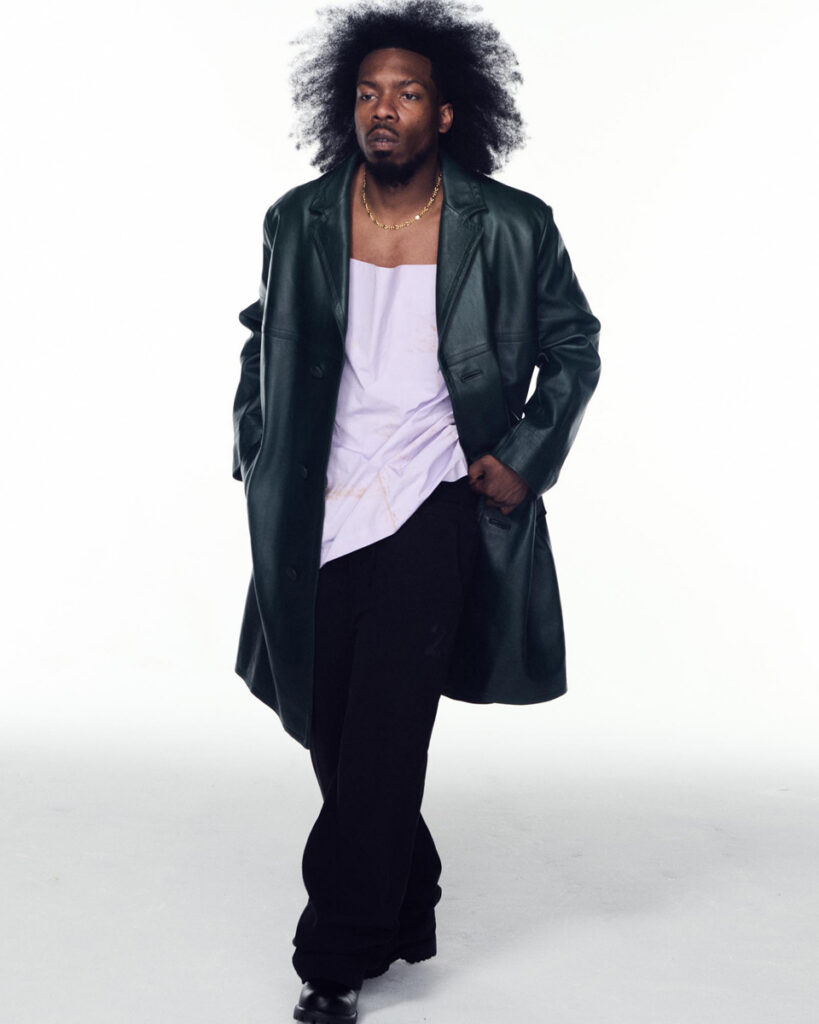
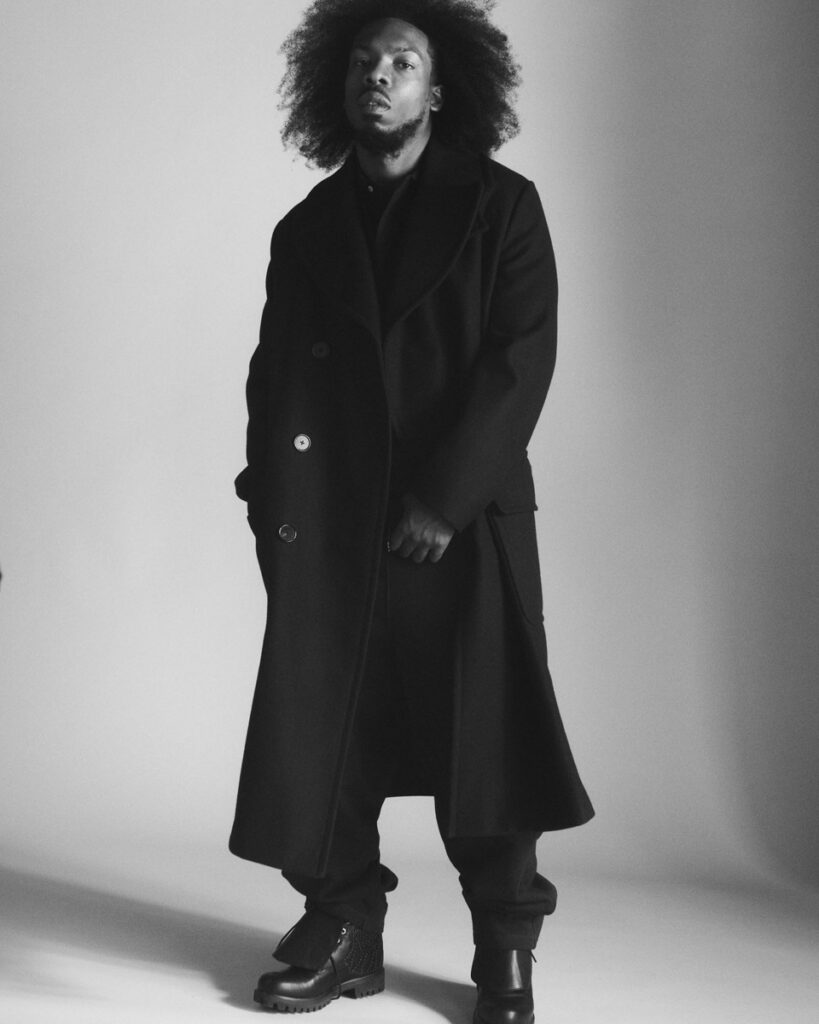
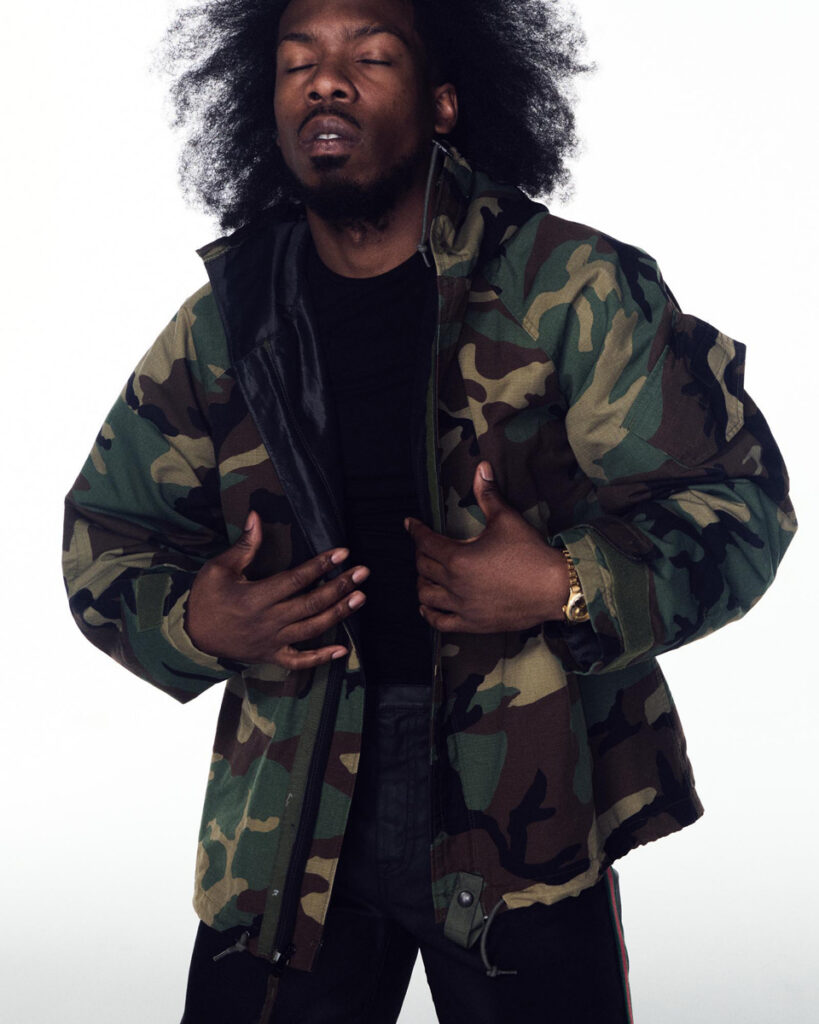
The photographer in model mode, flaunting his particular take on fashion
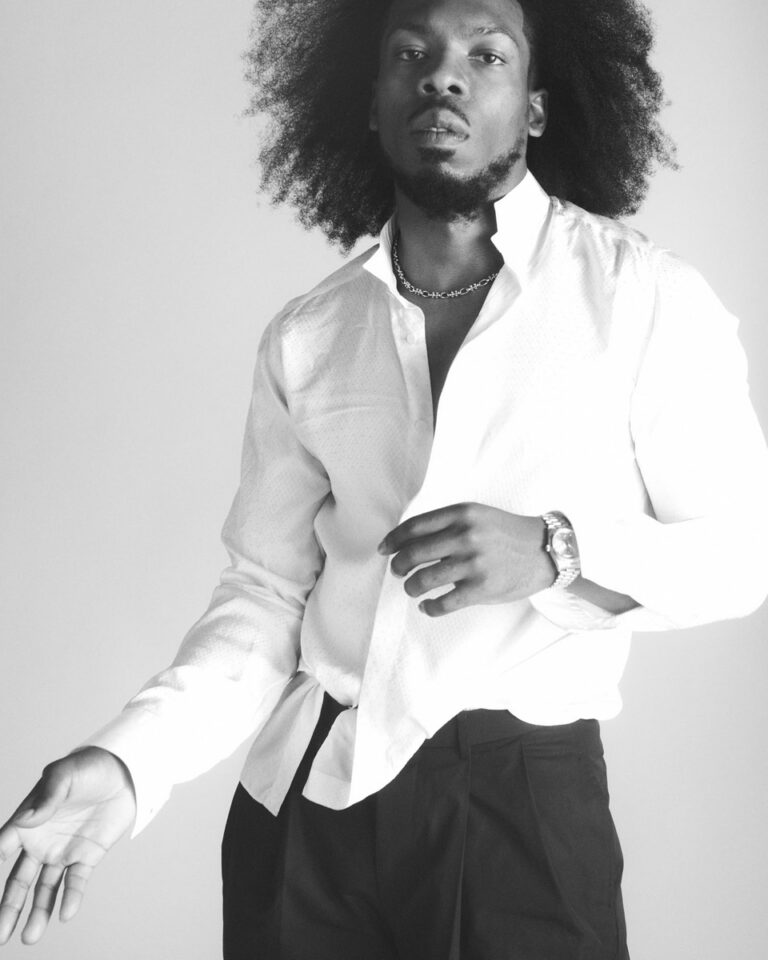
Gabriel Moses is the young photographer and artist from south London whose work is such an endlessly roaring success. Over the past half decade the 28-year-old’s images and films have taken the fashion world by storm with their distinctive cinematic style that’s rich in colour, shadows and often cryptic references. He likes to keep his work as varied and surprising as possible. A sampling of projects from the past year of work include: directing a campaign for Louis Vuitton, shooting the cover of football video game EAFC, designing sculptural trophies for the BRIT Awards, opening a big solo show in his hometown and making a movie for Jay-Z’s recent blockbuster stadium show in New York City. And while the sky is clearly the limit for Gabriel, he always makes sure to stay grounded. Here, he is interviewed by the photographer of this story, in a conversation full of enthusiasm and honesty.
From Fantastic Man n° 43 – 2026
Photography and text by OLIVER HADLEE PEARCH
Styling by MAX PEARMAIN
OLIVER—I wanted to start with a word, which is hunger. There’s this hunger and there’s this proudness in your work, which I love. It’s, like, “I’m important and I know I am,” and I think that’s really magical. Where does that hunger stem from?
GABRIEL—I think it comes from growing up in south London, and also being Nigerian. There’s this attitude of “If it’s learnable I can get it done.” So I grew up with this healthy confidence in myself that comes from seeing other people that look like me and come from where I’m from succeed. I grew up not too far from [former England and Man United footballer] Rio Ferdinand’s mum’s house. So when I was a kid I would see him in the neighbourhood and he was like a superhero to me. You’d feel ten feet tall knowing you were part of that legacy of people from south London doing their thing. Especially if it was football. So I’ve never had any kind of shyness when it comes to, like, expressing your talents. There’s nothing to lose. My mum’s always had this attitude as well with me. Even if I was a postman, my mum would tell me to just become the best postman in the world.
O—I can see that in your work, and in you as a person. I grew up in a very apologetic, very English family where it was “Don’t do this, don’t say that.” And I’m, like, “Actually, I want to fucking swear, and I want to storm the castle and get the gold.” I love that energy, and I think you exude it in abundance. Our industry thrives on snobbery – who you can and can’t talk to, what you can and cannot say – and I think when you rise above that you get to a much more special place. I feel, like, that’s what you do. You are able to look at the world differently and you have something different to say.
G—That’s partly because people didn’t believe that I could take pictures the way I do, or see the way I see, and it meant that when I was 17 or 18 nobody would listen to me. So instead of taking that to heart, it just encouraged me to do it my own way anyway. I think the fact that I didn’t study any of this meant that I had an almost childish ignorance. I didn’t know who the important art directors were, I didn’t know who the important designers were. I didn’t know the top stylists. I just built my own world. I was, just, “Okay, who likes my work and who respects me back?” I’ve always believed in excellence as well, which comes from having a background in sports, where you just push yourself to be the best that you can be.
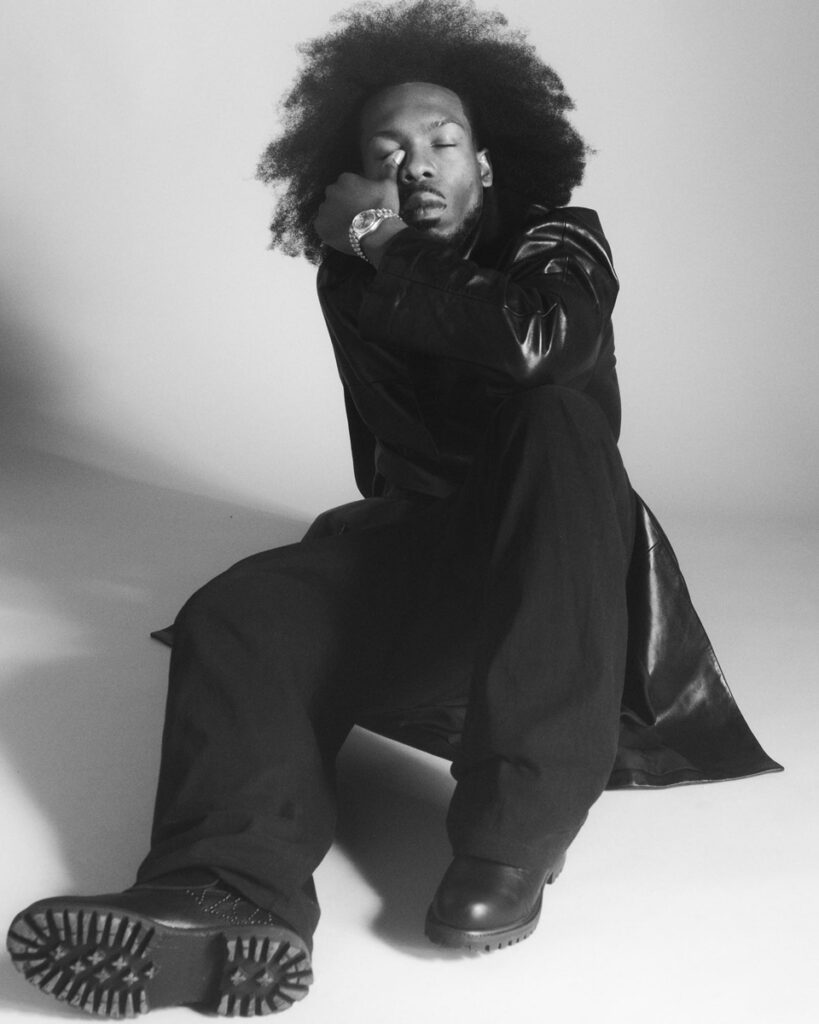
O—I also got started around 17, 18. I had been kicked out of school and I didn’t know a thing, especially about fashion photography. In a way, that’s liberating. Like, “No, I can’t do a picture like Steven Meisel, because I don’t even know who that is.” Often what you are doing is making mistakes, and often the mistakes are what makes it good. Do you feel you’ve found your style from figuring things out for yourself and just thinking about what you think looks good rather than what you’ve been told looks good?
G—Kind of, but I also hate not being good at things. I’m the kind of person who, if we go bowling and you smoke me up at bowling, you won’t see me again until I’ve been five times on my own, and then we’ll have a proper game. I’m a proper sore loser and I love to win, so I make sure I’m overprepared. So when I decided I wanted to do photography I really wanted to figure out what a nice image was.
O—But you’ve also clearly got natural taste and originality in your work, which can’t be studied. Where does that come from?
G—All my siblings are boys, apart from my one sister. There used to be a TV in her room when we were growing up, so I’d watch TV in my sister’s bedroom, and she studied fashion, so she’d have pages from ‘Dazed’ and stuff like that on the wall. All of these reference images or Alek Wek images. Now I’m, like, “Wow.” But I didn’t think “Wow” at the time. I was thinking, “What the hell is this bullshit?” I was rejecting it, but maybe subconsciously I was drawn to it.
O—You were absorbing it without realising.
G—Yeah, so I did understand fashion to a certain extent. Or at least I had my own interpretation of it. The second I picked up a camera I knew how I wanted the make-up to look. I knew what dresses I liked and didn’t like. I knew what kind of posing I liked. I had a lot of that instinctively, and then over time you start to slowly refine it. I also did a lot of homework, and I attacked it. Because I really hated the disrespect that came from being a young person, a Black boy from London, and people not thinking that I was an artist. It made me almost obsessed with doing my own thing, putting my name on everything, like: ‘A film by Gabriel Moses for Gabriel Moses’.
O— That’s why I started with the word “hunger.” I can feel it in your work. You’re like a charging rhino; you’re unstoppable. People can say what they want and it doesn’t matter. I think there’s not enough people putting themselves out there. We live in a very vanilla world, and people opt for safety.
G—Sometimes that’s because people have waited their entire life for their moment, so they feel they can’t fuck it up. It becomes inhibiting. Whereas for me all of this was plan B.
O—What was plan A?
G—I just wanted to play football. It was one of those professions where I’d seen people that looked like me succeeding. And if it wasn’t that, then I thought I’d go to uni and do marketing and work for Nike and have a job that was somehow linked to football.
O—How old are you now?
G—I’m 28. Now there are kids who have been inspired by what I’ve done. That’s something I’ve had to understand. When you come from a certain place and look a certain way and achieve certain things, it’s like you have no choice but to represent and wear it with pride. It’s been good for me to understand how the work you do exists in the real world and to take responsibility for it. I’m seeing kids who wouldn’t otherwise go to exhibitions go to my exhibitions, and they’re excited about it. That’s huge. You know, it’s like how when I was a kid I thought a rapper or a footballer was a cool job. Now there’s kids that want to be photographers or want to be directors.
O—It’s interesting that you used the word responsibility. Not a lot of people would think about it like that.
G—I think the space we exist in needs leaders. I grew up seeing someone like Virgil – a very graceful man who put community first and was just a very kind person. I was lucky enough to meet and work with people like him – or even Matthew Williams, who was one of the first people to allow me to work with passion. There were people who gave me an opportunity before it even made sense. I did Nike at 18. I’m sure these were things that needed serious explaining to the big decision-makers, but these people trusted me, and I grew into that role. I think that’s really important for anyone young coming up: to keep giving them opportunities. Even if it’s scary or seems like throwing them to the lions. Because they will either sink or swim, and actually more of them will swim than you think. When you give kids opportunities they don’t spend ages weighing up the pros and cons; they just do it.
O—Do you still have that lack of inhibition? You mentioned earlier starting out with a kind of childish naivety.
G—I do, a hundred per cent. I basically always feel like I did when I was 18 and stepping into this big, unfamiliar room. It’s just that the room gets bigger and bigger.
O—Another thing I love about you is your style and way of dressing. I think you clearly have your own way of dressing, which, similarly to your work, doesn’t really abide by
anyone else’s rules. It also links to masculinity. Who were your style icons growing up?
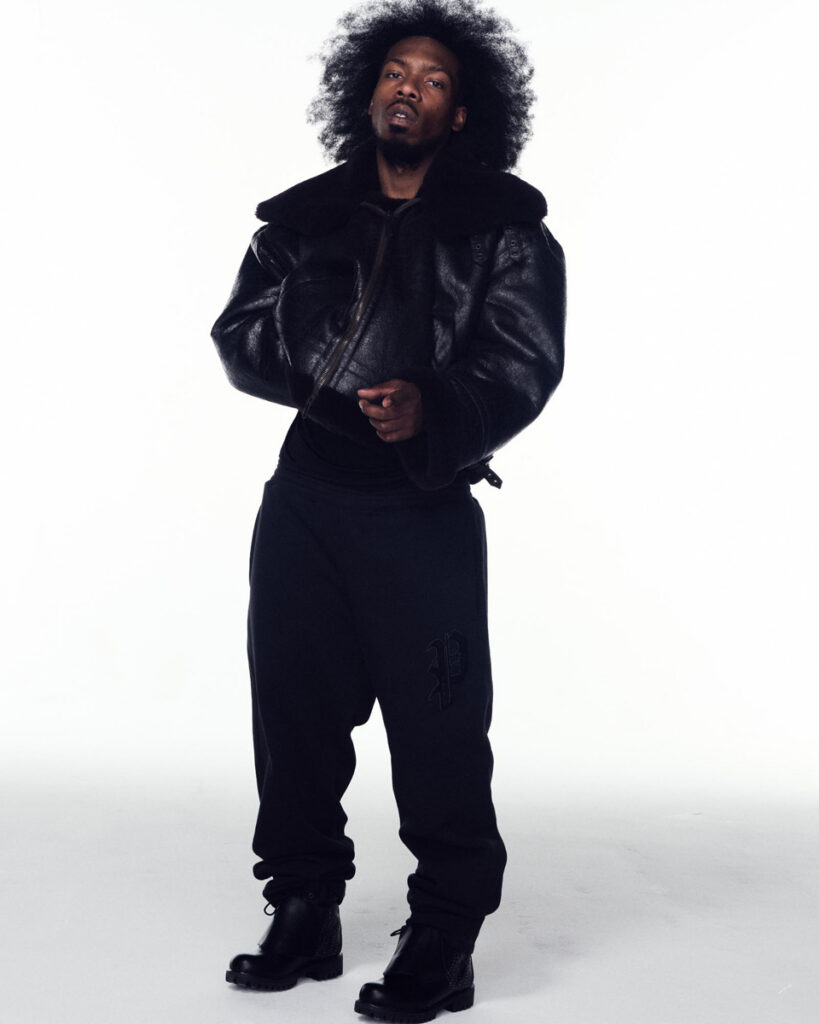
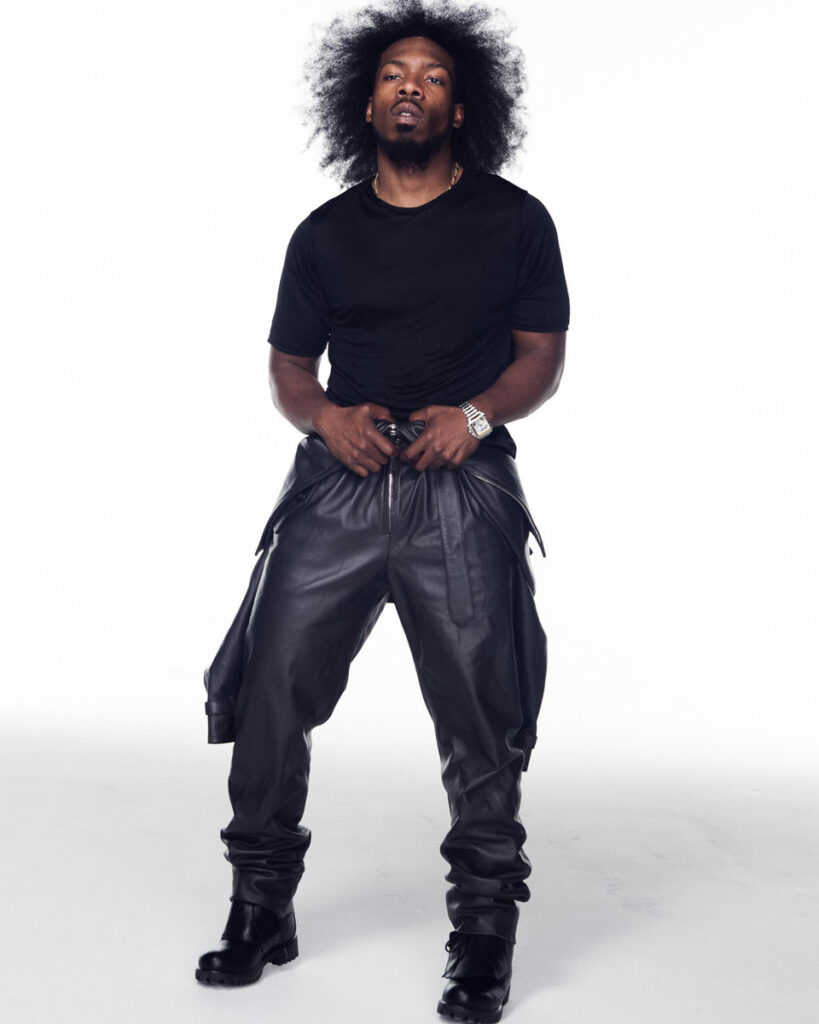
G—A lot of the time what you see me wear now are the things that I coveted but couldn’t afford when I was younger. And now I’ve got it in bulk. Stuff like Prada Cups or a Gucci belt. They are all symbols in a way. I think that heavily influences my style today. And I still like to mix that up with Nike things that you’d only find in Sports Direct. Sometimes it’s just a very simple thing that comes from growing up seeing these quite symbolic items, symbols of success or wealth. Getting my first Gucci belt was huge.
O—But I also see a calm in how you dress and how you carry yourself. I look at you and I see someone who’s very grounded in who they are, and very genuine.
G—It’s an upbringing thing. I’m the youngest by a long way. So I grew up knowing how to chill with adults. I knew how to be around my older brothers or my sister. I think it taught me what respect was, and understanding that if you give it you will receive it back. I think my mum and my sister in particular taught me that you will never lose from being a kind person. Even when I had the opening for my solo show ‘Selah’, my mum was telling me, “Make sure you say hello to everybody, make sure you go in there and let people meet you.” It was a sixteen-room exhibition. I was in there for hours, shaking people’s hands.
O—There’s a lot of people who try to become successful through creating or inventing an image of themselves. My double-barrelled name is not real, for instance. I invented it because my uncle, who has sadly passed away, told me that if I changed it people would think I was posher and I would be more successful. And maybe he was actually right, but I regret it a bit, too. I think it’s interesting that you show another way to achieve something, simply by being yourself.
G—I’ve felt cool since I was eight years old. My job didn’t make me cool. Often when I’m on set I just say I’m the cameraman. It might sound like dumbing down what I do, but I like it because it can help to fly under the radar. As a photographer you can relate to this, I’m sure. You will sometimes be on set and some shoots are super easy, but others are extra hard because of someone’s team. You see rude people; you realise how it doesn’t help at all.
O—A lot of that is ego and insecurity. Or people acting in the way they have been told they need to act in order to get ahead in the industry. There are a lot of people who blow up quite quickly at a young age. No names, but there is a change in character as things happen. I think you hold yourself so well in a space that can often have very toxic elements. Being nice on set. Being respectful. You don’t have to act up, or act in the way we’re often told we should, and I love that. You’re teaching a new generation of artists that you can have everything and still be kind of normal.
G—The more success I’ve been able to achieve, the more I’ve wanted to hopefully change the narrative around who gets to be successful. I never thought that using a camera would take me to the places I’ve got to, but if it is going to take me to certain places, then I want to show how to carry yourself when you get there.
Photographic assistance by Albi Gualtieri, Abena Appiah and Stefan Turner-Powell. Digital operation by Bella Sporle. Styling assistance by Emma Simmonds and Yuma Nakahama. Hair by Lee-Anne Willoughby. Production by Partner Films.