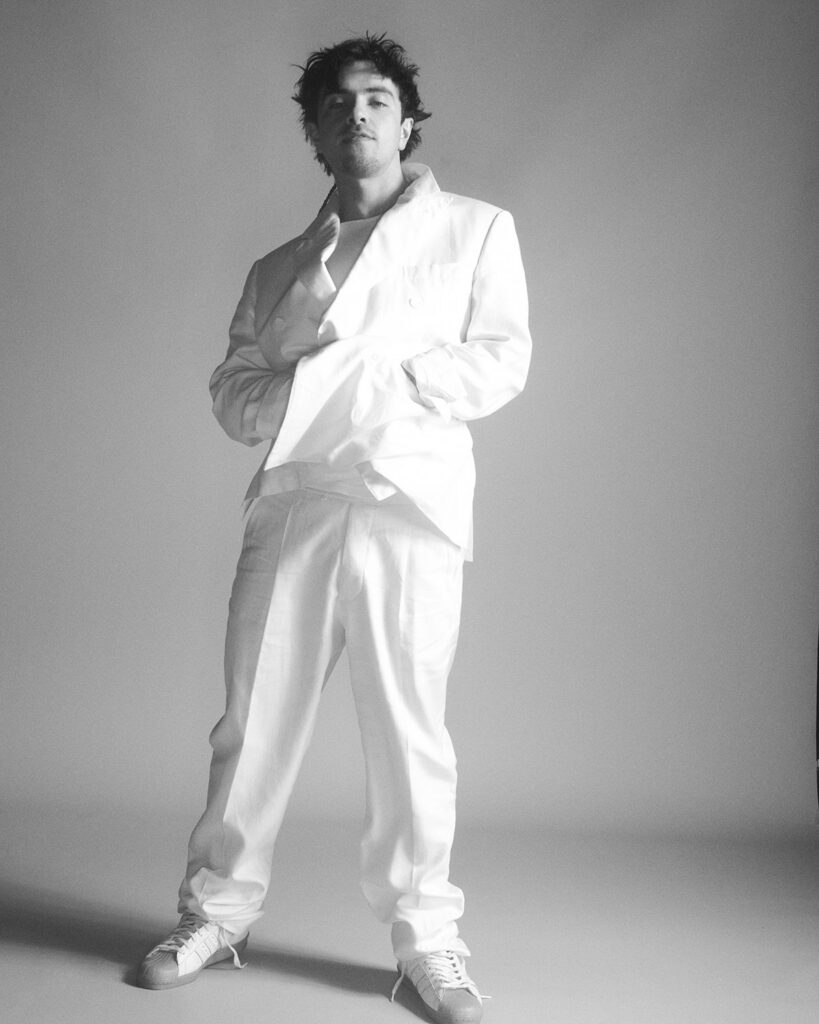
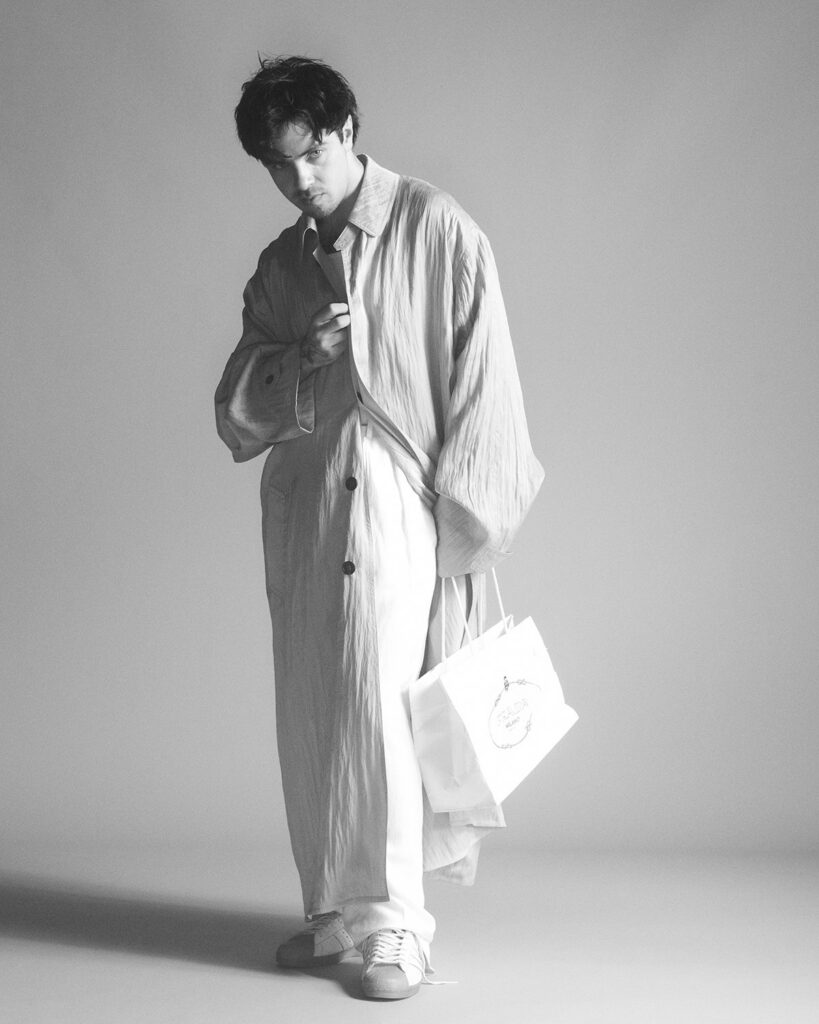
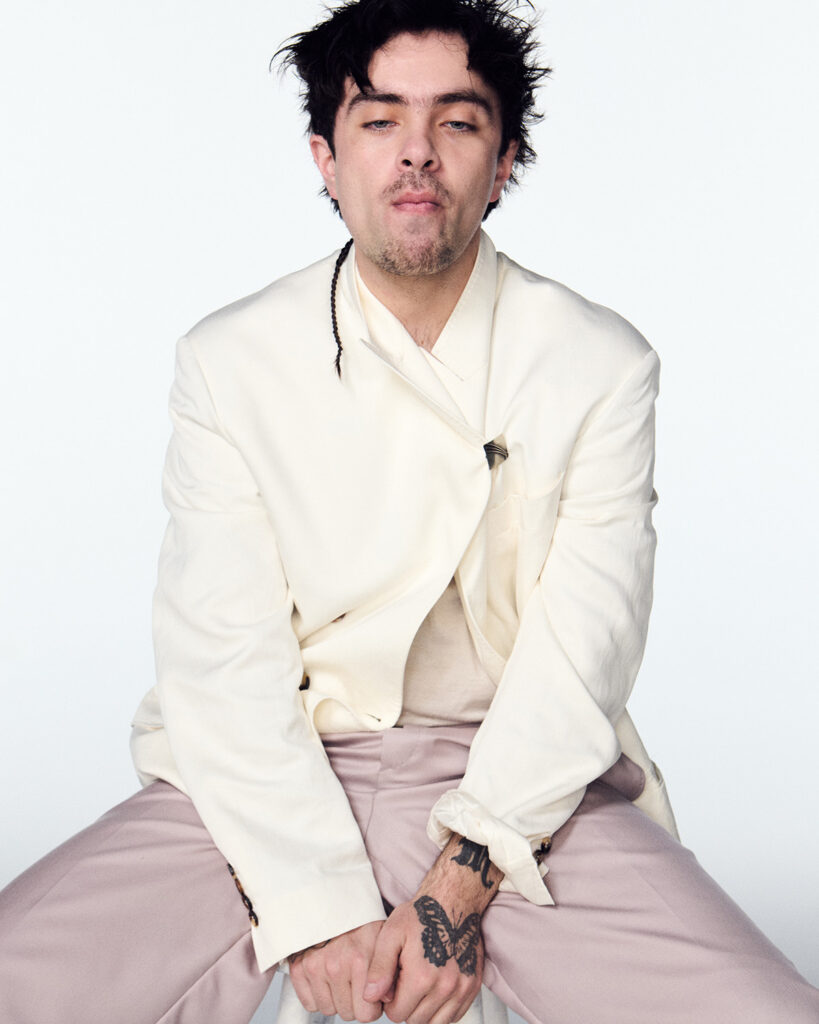
Aidan Zamiri
Makes films of all forms
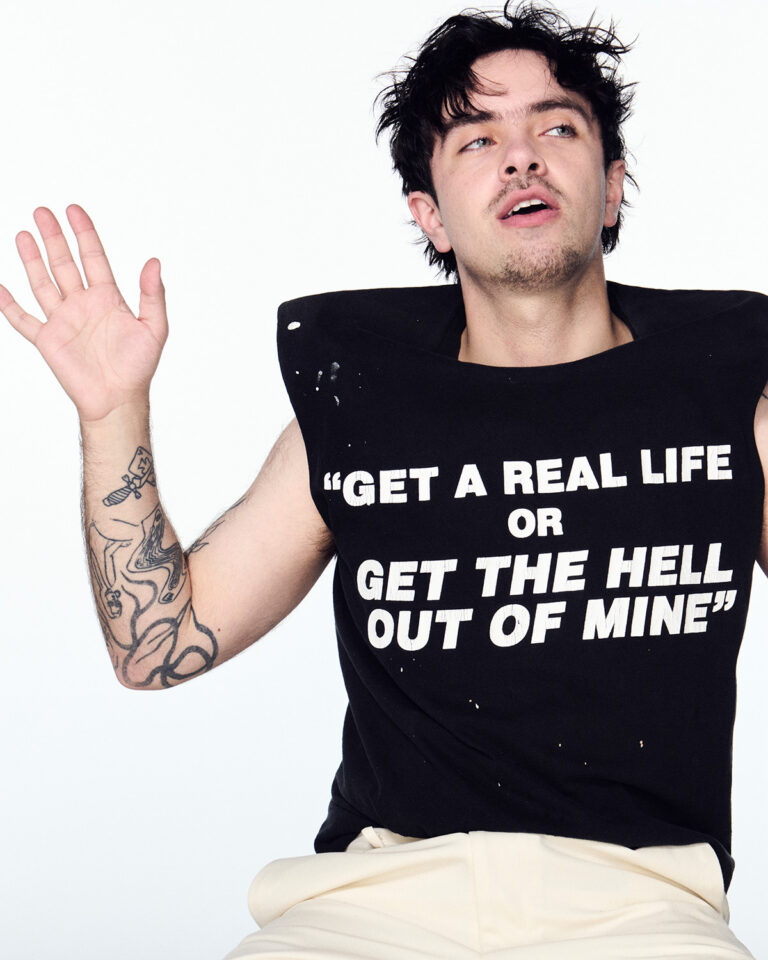
The super rapid rise of Aidan Zamiri hinges on his ability to make snappy films for the likes of pop megastar Charli xcx, movie heart-throb Timothée Chalamet and a whole host of other wonderfully famous people who want his distinctive and irreverent take on their work. Aidan made his name producing music videos, a medium that has apparently died out entirely. But maybe his success lies in the fact that everything is a video these days. Tiny snippets of footage. Livestreams. TikToks. The constant broadcasting of press conferences, meet-and-greets, red-carpet moments and more. It’s all part of the same continuous flow of moving image that the young director revels in. He also has a parallel career as an in-demand photographer. Given his tendency to work across different mediums, it is often impossible to predict what he will do next. Now he’s made the spiritual successor to ‘Spinal Tap’ with one of the biggest names in music. Not that he’s particularly fussed about becoming the world’s next mega director. For Aidan, all video, no matter the format, is his passion.
From Fantastic Man n° 42 – 2026
Text by CLAIRE MARIE HEALY
Photography by OLIVER HADLEE PEARCH
Styling by MAX PEARMAIN
“People think I might be aloof, but as soon as they meet me, it’s, like, the mystery goes out the window,” says Aidan Zamiri, moments after he pops his head out of his window to beckon me up to his place. “Actually, maybe I’m at risk of saying too much. It would be easy to have this kind of separate, jaded performance shell. To play a character.”
This particular Friday after New Year’s will be the photographer and director’s last quiet one for a while. Two weeks from now, Zamiri’s debut feature will premiere at the Sundance Film Festival and become immediately and utterly inescapable. A mockumentary starring the director’s friend and collaborator, Charli xcx, ‘The Moment’ will land in a blizzard of promotional tie-ins, custom-made puffer jackets and mile-high promotional posters in brat green emblazoned with the lowercase words “this is movie promo btw.” And somewhere in among this flurry of taut women and TikToks, all of which will play out on our phone screens over the course of the coming weeks, will be the figure of Zamiri himself: the Glaswegian first-time feature director who just turned 30 in November.
That’s all to come. For now, the director is hibernating in the hush of his east London home. He offers to make some coffee and gaily fusses around with a Japanese contraption before settling on the sofa and passing me a cup. The director’s entire body is stretched out on the chaise longue part as he speaks, feet not quite reaching the end. I would like to resist calling the director elfin, but something about the way he is sitting on the very low sofa makes it an inevitability. (It’s one of those Mah Jong ones, probably one of the few status indicators that could somehow still maintain the director’s endearingly crunchy vibe.)
Zamiri has big eyes and laughs easily, which makes him good-looking; his rat-tail is a surprise, because the rest of the look is fairly straightforward. Prior to this meeting, I’ve been told repeatedly how nice he is, something notable only in relation to the awfulness of most creatives in hyper-ascent (the director should know: his debut feature script, co-written with Bertie Brandes, is full of them). It’s a down-to-earthness the director maintains in the mix of the convocation of extremely hot women he is usually in the company of: surrounded by Charli, Rachel Sennott, Kate Berlant and Hailey Benton Gates at the premiere for ‘The Moment’, his outfit still had just a touch of Beyond Retro about it, his gestures a sweet awkwardness.
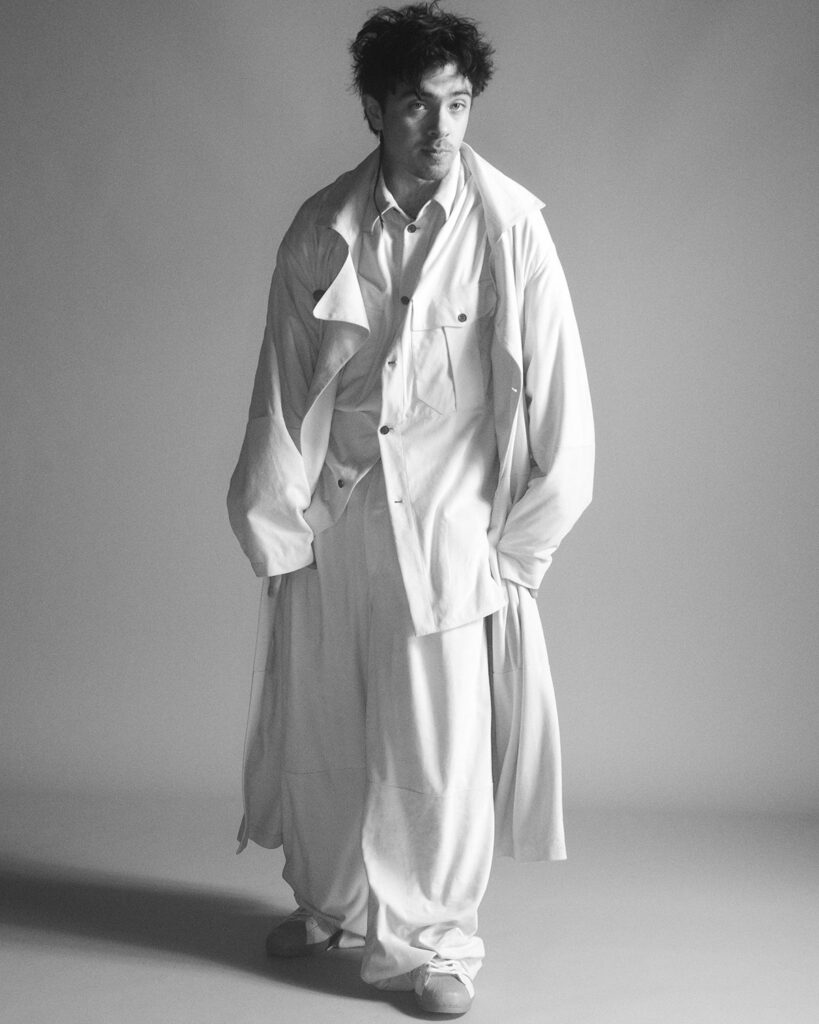
As a director, Zamiri is best known for his short-form film-making. He makes music videos for artists like Billie Eilish, Yung Lean, FKA twigs, Charli. He makes commercials and fashion films. He even makes hyper-personalised, full-on marketing campaigns, including live streams and guerrilla events, for movie stars. Now, with his feature debut, he finds himself widescreen, long-form and in front of multiplex audiences for the first time.
In film history, this moment is reminiscent of another. Three decades ago – right around the time baby Aidan was born in the suburbs of Glasgow – the British feature film was at a rupture point. The industry had suffered years of generic output and chronic underfunding that had matured into a creative slump. For most filmmakers on the come-up, music videos were where everything exciting was happening. The work of Spike Jonze, Michel Gondry and Chris Cunningham for artists like Beastie Boys, Daft Punk and Björk were where audiovisual experimentation was thriving, and British names like Walter Stern and Jonathan Glazer were quick to the uptake. For most of these directors, the energy and experimentation of music videos translated into their distinct voice in features.
MTV channels are no longer; label budgets are much smaller. Yet as a cultural format, the music video is experiencing a resurgence: one now oriented around, and optimised for, the host of new mediums that coalesce on our phone screens. Zamiri might call back the anarchic visual experimentation of his predecessors, but there is a sense of the clippable to his iconoclasm. Textured, fast, a little grimy, his are memorable images primed for narrative sequence, TikTok cutdown and looping Spotify canvas alike. If the short-form work of the directors of the 1990s once made feature films exciting again, it begs a question: What does the journey of a film-maker like Zamiri tell us about the state of feature film-making now?
‘LET’S MAKE OUT’, DREAM WIFE, 2017
A three-piece punk band performs on a small stage inside a makeshift prom venue. The band members wear heavy red eye make-up. They play electric guitars and drums and perform directly towards the camera. On the dance floor, young people jump and embrace. We’ve seen this film before. We’ll see it a hundred times again.
Zamiri’s route to directing was a circuitous one, and he has counted graphic designer, set designer and (to this day) photographer among his various roles on the come-up. “My dad told me that the first thing I said I wanted to be was a director, though I don’t really have a recollection of that,” he says. His dad is Scottish with Irish heritage and his mother is Iranian, which explains the uber-Celtic looks and dark hair.
It’s tempting to assume that Zamiri was the classic teenage outcast who applies to art school at the first available chance; instead he was somewhere between obedience and rebellion, self-bleaching his hair like the emos in school, all while keeping up his flute and saxophone playing in the school orchestra and jazz band. (“I genuinely went to band camp,” he admits.) He cites the Middle Eastern culture of his home life as one reason for the hardworking attitude. “I wasn’t necessarily nervous as a teenager, but I was very conscious to try and do my best all the time. I think that follows through now. But I’m glad I re-centred my focus as I got older: not working out of fear, like, ‘I’m supposed to do well,’ but for the excitement of being able to.”
The suburbs were set design, the computer screen a portal. “It was a very different form of the internet: much less about self-presentation and way more about discovery,” he describes, having hit Tumblr in its peak in the early 2010s. “There was so much that felt unpoliced, that unlocked so many things.” (He even remembers his URL, but that’s for him to know as he suspects it’s still live.)
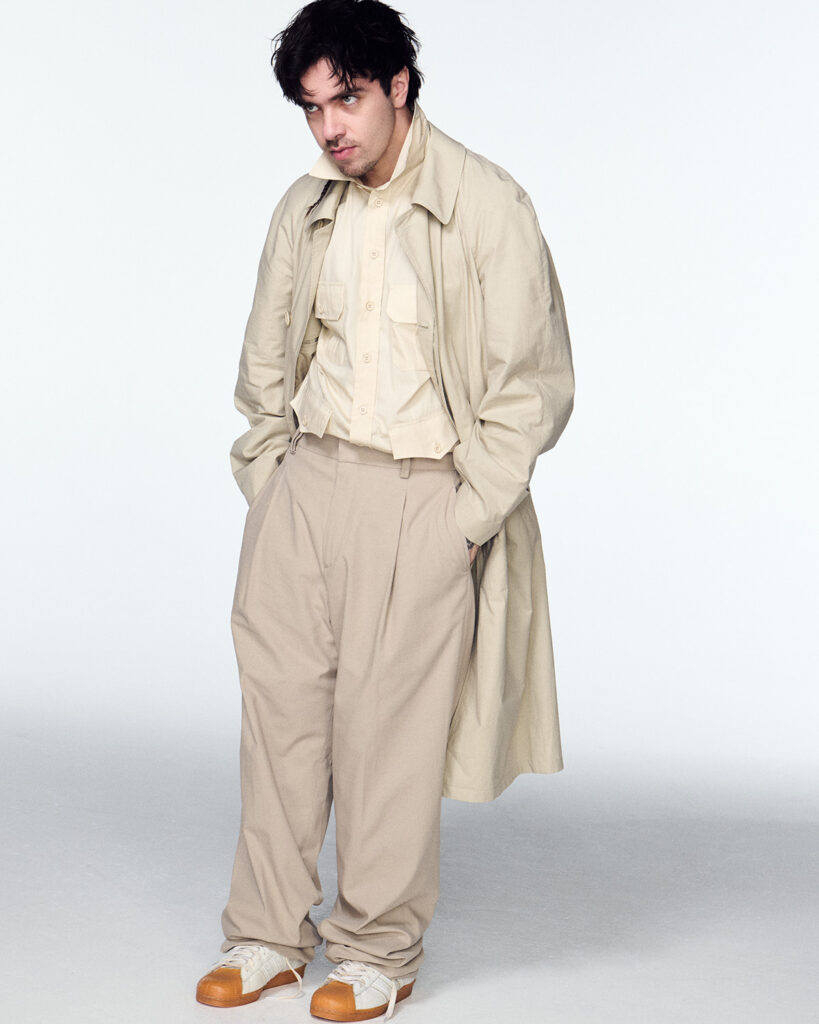
After school, Zamiri got into Central Saint Martins to study graphic design. As usually happens, his first creative experiments were more to do with the community he found there than strict university course curriculum. “Coming to London was a jaw-dropping feeling. Like, ‘Wow: here are all the things I’ve been hoping or dreaming about, or seeing on the internet, and now I get to be in amongst it all.’ That’s why the appetite stays really strong, even now.”
His first music videos came about in the usual way: being friends with the band. Zamiri’s early work for punk group Dream Wife came from that same art-school network: clips like ‘Kids’, ‘Let’s Make Out’ and ‘F.U.U.’ took scenarios like sportswear infomercials, a school prom or professional wrestling as fun aesthetic themes to play around with, and formed around conventions that have long been music-video standards. “I think we had £150 or something to work with,” he recalls now, laughing. “At the time I thought it was the most money I’ll ever have to work with on anything. I didn’t really know what I was doing, but we made a video, edited it together, and then it actually did exist. That unlocked some kind of confidence to be, like: ‘You can just do it.’”
While the scale of Zamiri’s music videos has certainly tipped over the past decade, there are certain signatures already recognisable in his early work: a layered sense of references, intuitive transitions, an active camera, a sense of real-world texture even in fantasy scenarios. Take one of Zamiri’s most beloved videos, ‘Guess’, from 2024, which sees Billie Eilish crashing Charli xcx’s house party on a construction vehicle before they both roll down a vast mountain of knickers: Zamiri has always loved explosions, crowds and dancefloors full of people snogging hard.
‘META ANGEL’, FKA TWIGS, 2022
FKA twigs stands alone in a public park. The camera alternates between unsteady close-ups and wide shots. The quality is shaky, like something handheld. The video cuts to a rooftop. The singer appears again holding a bow and arrow. She takes aim at something in the distance and lets fly. The camera is the arrow, travelling over the city until it reaches the doppelganger and strikes her in the heart.
By the top of 2020, Zamiri was beginning to narrow his pursuits, making his way shooting editorials for magazines and campaign work for Mowalola, Vivienne Westwood and Nike (he signed with his agency, Object and Animal, that year). The surrealistic potential of fashion films was “formative.” But if there was an event that unlocked everything for Zamiri, it was the same one that interrupted creativity for many others: the pandemic, and the increased reliance on our phones that it set in motion. “As someone that makes films, it could have been quite depressing to think about the changes [we were experiencing] in the attention economy,” he says, “our focus shifting from longer form storytelling to extremely digestible, bite-sized stuff that can feel like a slot machine. I wanted to figure out how to… not necessarily even embrace it, but to muse on it.”
Around this time, Zamiri started working with musician FKA twigs on a series of videos for her mixtape ‘CAPRISONGS’. The resulting “caprivids” are where Zamiri begins to see beyond nostalgia and the VHS aesthetic of many of his peers – and of his own early work – and instead find the potential for emotion in the light of our screens. They’re also the first example of Zamiri working in series with an artist, like he tends to do now.
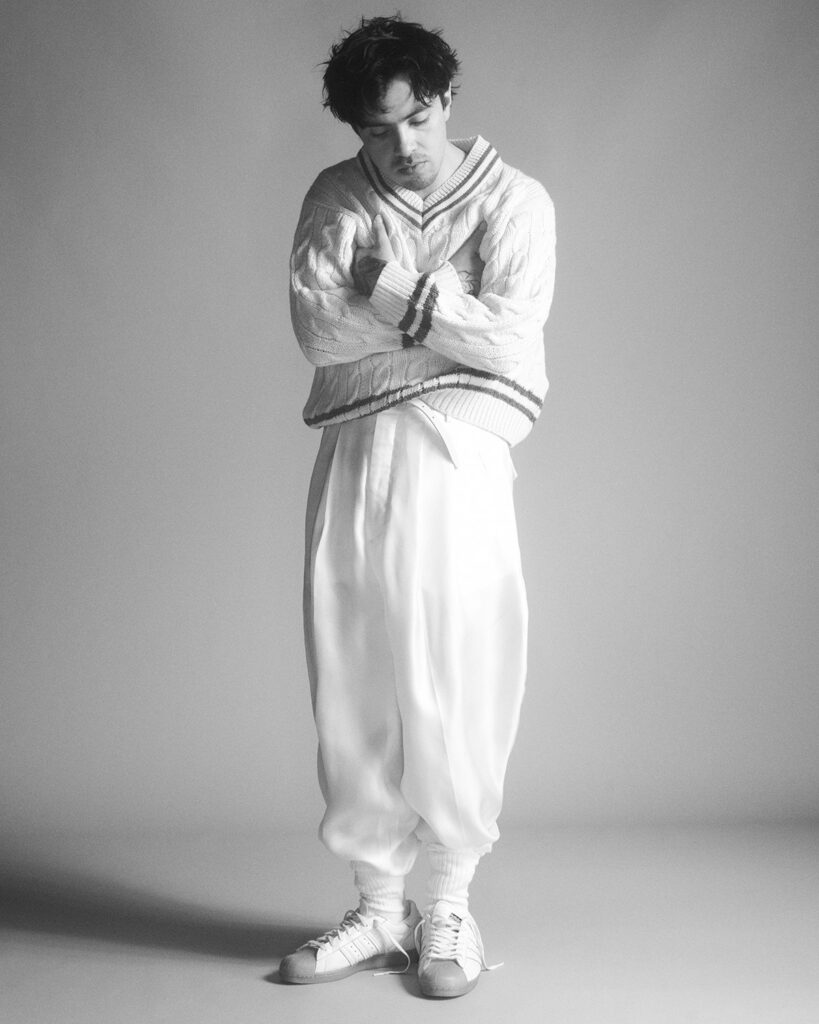
In ‘meta angel’, a drone camera brings the viewer into the point of view of an arrow; in ‘pamplemousse’, rapidly sequenced renderings of twigs become a kind of futuristic flipbook. But the most powerful expression of Zamiri’s embrace of new technologies comes with ‘ride the dragon’, in which twigs cosplays teen girlhood in and around Hackney. The edit is lo-fi and raw; the use of a long lens gives a sense of observing from afar, as though from the top deck of a passing bus. Nothing is tightly staged except the precise movements of the performer and her dancers, who move together like schoolgirls on a TikTok video – and get asked to “move along now” by actual officiants and security guards. “It’s one of my favourite videos I ever made,” says the director excitedly, swivelling on his sofa cushions. “I was searching for something that had that same feeling of being on your phone…[something that is] mundane with magic injected into it.” Once he made those, he thought, “I want everything I make to feel like this.”
UNTITLED TIMOTHÉE CHALAMET LIVESTREAM, 7 October 2025
We open on a figure with a giant, orange ping-pong ball for a head. He is wearing a shell suit jacket with the words MARTY SUPREME printed across the front and stands in an enclosure filled with smaller orange balls that fly erratically around him. The camera pans left across an open field, revealing identical figures playing table tennis. We pan back to the first man, who escapes his enclosure and takes off the head, revealing Timothée Chalamet. The camera continues to pull back as the actor strides through the tall grass, towards it.
Even with all the attention on ‘The Moment’, Zamiri doesn’t see making a feature as his point of no return – a graduation out of short-form. “I loved making the film, and I hope I get to do more, but the core idea of, like, why I choose to do something in a certain format is really based on whether that is the right way to communicate that idea,” he says. This attitude recalls Jonathan Glazer, a figure from the ’90s generation who has spoken publicly about seeing everything – commercials, music videos, even pieces of content – as “his films.”
Zamiri’s most unpredictable output has been his self-described “amorphous” work with actor Timothée Chalamet. The friendship began when the actor messaged Zamiri out of the blue ahead of the ‘Rolling Stone’ cover story he had been commissioned to shoot in summer 2024 – something that “literally never happens.” Soon Chalamet was inviting Zamiri to his house in LA to develop ideas for the shoot; he liked what he had seen of Zamiri’s output and was keen to work closely with an image-maker to shape the visuals and press around the Bob Dylan biopic ‘A Complete Unknown’. “We basically built a shorthand before we were ever on set,” describes Zamiri, comparing it to working with musicians where you discuss the meaning of the songs before crafting the visuals.
That shoot went so well, running into a second day, that Chalamet and Zamiri simply kept going. Since then, the collaborative projects have become hard to predict, even verging on the avant-garde: an elaborately scripted Zoom call about a marketing roll-out; a Lime e-bike ride into a red carpet premiere; a seven-minute Bob Dylan lip sync on a pier in New York at dawn (Zamiri’s involvement isn’t always credited so much as it is identifiable; in the latter film, his voice is audible in the background).
For Zamiri and his collaborator, the ongoing project is about the kind of “authorship” actors don’t normally get to participate in. “Timothée messaged me at a turning point in his life,” he says. “He wanted to be way more involved and in control of how he expressed himself outside film. For actors, there are such formulaic expectations, but most musicians get that opportunity constantly. And he wanted to disrupt that.”
This all appears so effortless that it can be easy to forget the most radical element of all: since when have mainstream movie heartthrobs made personalised experimental movies with directors they befriend over iMessage? More than anything, the projects serve to crystallise the strange moment of movie dissemination we find ourselves in right now, where actors become pop stars and the audience remake and remix your movie’s content before it’s even out. The neighbouring releases of Josh Safdie’s ‘Marty Supreme’ and Zamiri’s ‘The Moment’ via film studio A24 for instance, was like the best marketing crossover episode ever (Chalamet shouting out Zamiri’s debut film in interviews; Zamiri concepting the marketing films for Chalamet’s with all the ambition of half-time at the Super Bowl). In another era, such crossover would have likely put some noses out of joint.
In his living room, Zamiri has both of the ‘Rolling Stone’ covers – the US and UK editions – that began his friendship with Chalamet to hand. He loves the shoot to this day, and a few other favourite photographed moments are on display on his bookshelf, like the Caroline Polachek record-cover art set on the Bakerloo line (again: mundane, plus magic). In the end, as unusual as the work with Chalamet first appears, Zamiri just sees it as the foregone conclusion of what he’s been making with famous people all along – all of his collaborators share a sense, he feels, of “throwing stuff at the wall and seeing what lands.”
“I can only really work with people I am genuinely a fan of because I dig into everything that I think they’ve ever done, at least publicly,” he explains. “Then I think: ‘If this is the story they told up till now, what can they do that feels additive or disruptive or new? And not just for them – but for the rest of the world.’”
‘THE MOMENT’, 2026
Charli xcx is suspended several meters above a stage in a harness, dressed in a showgirl costume. The camera remains positioned below, like it is asking for permission. Behind, her face is blown up on large screens. The video alternates between the distant view of her body in the harness and the close-up of her face on the screens. The interplay conveys the split: the image of the pop star and the reality of the woman.
Zamiri is certainly not alone as a debut feature film-maker rising out of short-form commercial work today. But at this precarious and charged moment in the film industry, where the Hollywood marketing machine, consumer goods and short-form online content have never been more closely intertwined – and as movie studios need pop stars who need movie studios – he is the only one who has made his debut feature about, and from inside, this very tangle.
It was September 2024, that is, the factual – or first – death of brat summer. “Charli was receiving a lot of interest in doing a concert film or a tour documentary,” recalls Zamiri. “That’s what happens with an album that’s done really well: ‘Let’s make a film about it and continue to profit from it in that way.’ Charli, knowing that that was an expected formula, felt like that was not very – for want of a better word – ‘brat.’”
Instead, in December, drawing from a letter of the concept written by Charli, Zamiri and Brandes set about writing something that could capture the extremity of that “propulsive year.” To borrow phrasing from one of its inspirations, Rob Reiner’s ‘This Is Spinal Tap’ (1984), the result is the classic mockumentary format turned up to 11. That’s partly down to the discordant A.G. Cook sound design, partly to the movie’s high-velocity edit and abrasive intercuts, and partly to the replacement of faux-documentary talking heads with an intense intimacy provided by the continuous mood shifts of Charli herself. The speed, for this self-described “reactive” director, is the point. “It’s not that it’s always conducive to making amazing work to be doing it quickly,” he says of the film, which was scripted in December 2024 and filmed in 26 days the following March. “But I do feel like a lot of my work exists because I’m excited by the idea of processing what is happening culturally in the world around us.” As the shooting script developed, Zamiri recalls that Charli would more than once call him to say that something in the film’s plot had just happened in real life.
As intense as ‘The Moment’ is in its stylings, it’s also in the end an unexpectedly quiet movie – proof of its director’s narrative command well beyond a memorable cutdown. In a film about trying to scratch at the truth of fame, Zamiri knows that the banal, grimy underside is the best evidence: glass conference rooms, Zoom calls in taxis, legal contracts. He directs Alexander Skarsgård, especially, in a perfect comic dance as a hooey LA creative; he approaches his muse, Charli, at every unflattering angle. At time of writing, it has already become A24’s fastest selling limited release to date in the US (and is looking like it will continue to break records as it expands globally).
“Now, my debut feature is this bizarre mockumentary about a pop star that’s become one of my closest friends,” he reflects. “It’s a bizarre thing to articulate, but I’m glad that it is.” If ‘The Moment’ isn’t easy to place, that’s something Zamiri – now expert in marketing as an opportunity for play – is able to have fun with.
“Hopefully it acts as a misleading time capsule of this era,” he says. “Like the way people watch ‘Spice World’ and are, like, ‘What was that? Are they a band from the movie? Or is this a movie about the band?’ I like this idea of confusing archaeologists of an imagined future.”
Zamiri mentions at some point that he (nervously) sent ‘The Moment’ to documentarian Adam Curtis, of whose work he’s a big fan. “I think he’s a genius in the way he ingests the world around us,” he gushes. “Thank God, he really loved it.” The Curtis comparison feels appropriate to the whirlwind of visual culture and real-time mythmaking swirling around Zamiri right now. But it also struck me how the dulcet-toned documentarian, sifting through his archive material in dusty rooms at the BBC, would never attempt to process culture at the real-time speed of his acolyte.
As our cozy sofa chat winds down, Zamiri mentions his growing interest in the culture of Gen Alpha, their taste for surrealism and “embracing of nonsense.” I tell him that the idea of feature film-making inspired by the meme “6-7” makes me very nervous. But where I might say, “Why?”, this director says, “Why not?” Or as he puts it: “Young people’s way of receiving information and communicating information is now in this specific realm, you know? And the danger of removing yourself from the technology around you is that you speak to the same group of people forever.”
Zamiri is thoughtful about his craft, and even as the director does so much to define new expectations of how films are experienced, he is increasingly reflective on his work beyond the Instagram-fuelled world. After all, at least at the time of writing, debut feature films by up-and-coming directors still premiere at film festivals with in-person audiences, under embargo; still get trashed or praised; still get bought or sold; still win Oscars, or fade away – or win Oscars and also fade away. It might all be content in the end, but the old arenas of approval are holding on.
Maybe that’s another reason why Zamiri prefers to be everywhere all at once, hard to pin to one central mast. “I’ve never seen it as this rung ladder of: ‘If I take a photo, then I can make a music video, then I can make a film, and then I get to be Francis Ford Coppola,’” he says. “That is not the plan of action. All of it feels important. It all feels like different ways of expressing something.”
“Do you want to go again?” are the first words spoken aloud by a character in ‘The Moment’. But it’s Aidan Zamiri, the young director both in the eye of the storm and technically offscreen, who is asking the question.
Photographic assistance by Albi Gualtieri, Thomas Lombard, Sasha Vanner and Stefan Turner-Powell. Digital operation by Bella Sporle. Styling assistance by Emma Simmonds. Production by Partner Films.